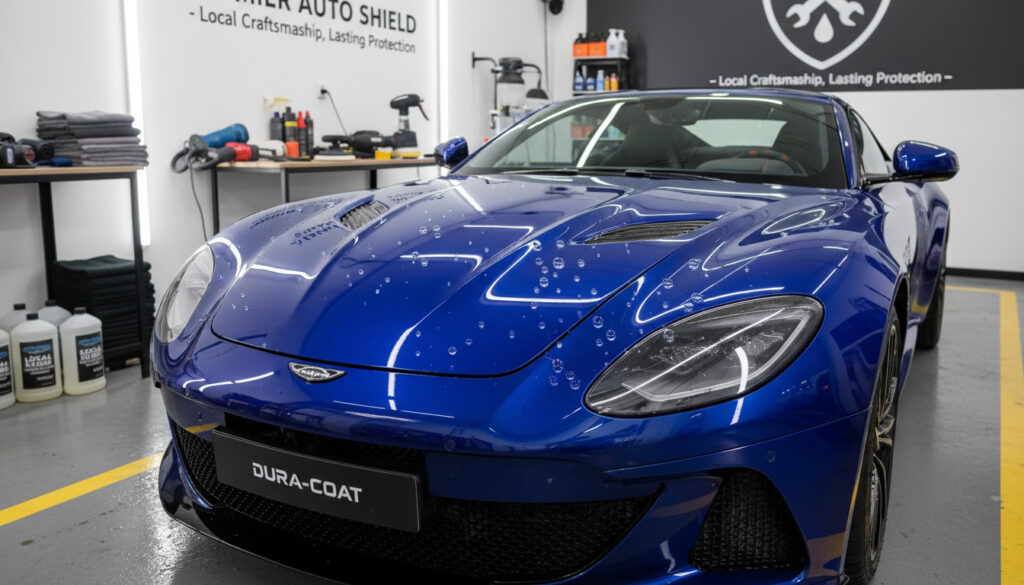
Ceramic Coating Near Me – Costs, Durability, Local Services
Searching for ceramic coating near me connects vehicle owners with professional services that apply liquid polymer shields to automotive paint, creating hydrophobic surfaces that chemically bond to the finish rather than merely sitting on top like traditional wax.
This advanced treatment generates a protective layer that repels water, dirt, and environmental contaminants while offering UV resistance and maintaining resale value. Professional application creates an invisible shield that reduces maintenance demands significantly compared to conventional sealants.
Local availability varies by region, with North Carolina shops offering tiered packages ranging from entry-level protection to lifetime warranty coverage. Understanding the true costs, durability expectations, and application standards helps identify qualified installers capable of delivering lasting results.
What Is Ceramic Coating and Why Get It Near You?
Hydrophobic surface repelling water, UV rays, acid rain, and contaminants
2–7 years depending on layer count and maintenance quality
$500–$2,000 per vehicle based on size and correction needs
Cars, boats, RVs, and motorcycles requiring long-term paint preservation
Ceramic coating serves as a liquid polymer that chemically bonds with factory paint, producing a semi-permanent barrier against oxidation and environmental etching. The hydrophobic properties cause water to bead and roll off, carrying surface dirt and reducing wash frequency.
Key advantages for local vehicle owners include elimination of regular waxing sessions, resistance to bird droppings and tree sap common in North Carolina climates, and preservation of gloss depth that outperforms store-bought sealants. Multi-layer applications create thickness measuring twice that of standard treatments.
- Chemical Bonding: Forms covalent bonds with paint rather than temporary adhesion
- UV Shielding: Prevents oxidation and fading from sun exposure
- Contaminant Resistance: Deflects acid rain, road salt, and industrial fallout
- Surface Slickness: Reduces dirt adhesion, allowing easier rinsing during washes
- Minor Damage Resistance: Protects against light surface marring from washing
- Value Retention: Maintains resale value by preserving original paint condition
- Cost Efficiency: Saves $50–$200 per avoided waxing session over years
| Aspect | Specification | North Carolina Average |
|---|---|---|
| Entry-Level Cost | Single layer, minimal prep | $300–$500 |
| Mid-Range Cost | Multi-layer with paint correction | $500–$1,200 |
| Premium Cost | Lifetime warranty, extensive prep | $1,500–$3,000+ |
| Paint-Only Coating | Exterior painted surfaces | ~$800 |
| Full Vehicle Coating | Paint, glass, wheels, trim | Starting at $1,350 |
| Application Duration | Professional labor time | ~15 hours |
| Product Material Cost | Coating materials per vehicle | $200+ |
| Expected Lifespan | Professional installation | 2–5+ years |
| Warranty Coverage | Service guarantee period | 1 year to lifetime |
| Maintenance Savings | Avoided waxing costs | $50–$200/session saved |
How Much Does Ceramic Coating Cost Near Me?
Regional pricing reflects vehicle size, existing paint condition, and service tier selection. Full vehicle treatment covering paint, glass, wheels, and trim typically starts near $1,350, while paint-only applications average around $800.
Entry-Level vs Premium Investment Tiers
Entry-level packages between $300 and $500 provide single-layer protection with minimal surface preparation, suitable for newer vehicles with well-maintained finishes. These offerings typically carry shorter warranty periods and exclude extensive paint correction.
Mid-range services from $500 to $1,200 incorporate multi-layer applications, moderate paint correction, and warranties spanning one to five years. Premium installations exceeding $1,500 deliver lifetime warranty coverage, comprehensive surface preparation, and coating layers twice as thick as standard applications.
Understanding Regional Price Variations
In North Carolina specifically, costs range from $300 to $2,000 depending on urban market density and shop specialization. Fayetteville-area providers structure packages from $495 Sport options to $2,000 ION Lifetime coatings.
Labor intensity drives 60% of total cost, with professional application requiring approximately 15 hours of meticulous surface preparation and coating installation. Product expenses exceeding $200 per vehicle account for the remaining material investment.
How Long Does Ceramic Coating Last and What Maintenance Is Needed?
Professional ceramic coatings demonstrate durability spanning two to five years under normal driving conditions, far exceeding traditional wax that requires reapplication every few weeks. Premium multi-layer systems with proper aftercare occasionally extend protection toward lifetime coverage timelines.
Durability Expectations by Service Level
Single-layer entry coatings typically maintain effectiveness for two to three years before requiring renewal. Multi-layer professional installations with paint correction backing regularly achieve five-year performance marks.
Lifetime warranty packages utilize advanced nano-ceramic formulations applied in multiple stages, creating measurable thickness that withstands environmental exposure significantly longer than consumer-grade alternatives.
Essential Maintenance Protocols
Maintained hydrophobic properties require regular washing using pH-neutral cleaning products without abrasive techniques. Coated vehicles demand no special ongoing maintenance beyond standard car care, though avoiding harsh chemicals preserves surface integrity.
The slick surface allows dirt to rinse off with reduced scrubbing, decreasing wash frequency and physical abrasion during cleaning cycles. Water beading indicates active hydrophobic function; diminished beading signals the need for maintenance assessment.
DIY Ceramic Coating vs Professional Services Near Me
The application method significantly impacts bonding quality, appearance uniformity, and long-term protection validity. Professional detailers utilize high-quality formulations with expert installation techniques unavailable through consumer channels.
Limitations of Consumer Application Kits
DIY ceramic coating products available through retail channels often produce uneven coverage, inconsistent thickness, and premature failure compared to professional results. Consumer-grade formulations lack the chemical concentration and preparation protocols necessary for proper paint bonding.
Without controlled environment application and paint correction expertise, DIY attempts frequently trap surface imperfections beneath the coating layer, permanently sealing swirl marks and scratches into the finish.
Uneven application creates high spots and streaking that require compounding to remove, potentially costing more than professional installation to correct. DIY kits provide no warranty coverage for failure or improper bonding.
Professional Standards and Warranty Coverage
Certified installers follow strict preparation protocols including decontamination, clay barring, and paint correction before coating application. Professional services include workmanship warranties ranging from one to five years for mid-range packages, with lifetime coverage available for premium tiers.
Reputable shops maintain certifications from coating manufacturers, ensuring access to proprietary formulations and validation of installation expertise. Warranty protection requires documented professional application; consumer-applied products void coverage eligibility.
How Is Ceramic Coating Applied?
The installation process follows a sequential protocol requiring controlled environments and specialized equipment. Understanding these stages helps set realistic expectations for service timelines and vehicle downtime.
- Consultation and Quote: Technicians assess paint condition, measure defects, and recommend package tiers based on correction needs and client goals.
- Paint Correction: Surface imperfections, swirl marks, and oxidation are leveled through compounding and polishing to create a flawless substrate for coating adhesion.
- Surface Preparation: Chemical decontamination removes embedded particles, followed by clay barring and solvent wiping to eliminate residues that prevent bonding.
- Coating Application: Nano-ceramic liquid is applied in controlled sections, leveled to uniform thickness, and flash-cured under specific environmental conditions.
- Curing Period: Chemical bonding continues for 24–48 hours post-application, during which the vehicle must remain dry and untouched to ensure full hardness development.
- Final Inspection: Technicians verify coverage uniformity, remove any high spots, and document the service for warranty activation.
What Are the Established Facts and Persistent Myths?
Clear distinctions exist between verified ceramic coating capabilities and marketing exaggerations that create unrealistic expectations among vehicle owners.
| Established Information | Uncertain or Misleading Claims |
|---|---|
| Creates hydrophobic surfaces causing water beading and contamination resistance | Provides “permanent” protection never requiring renewal or maintenance |
| Chemically bonds to paint for 2–5+ year durability | Creates “100% scratch-proof” surfaces immune to physical damage |
| Reduces UV damage, oxidation, and environmental etching | Eliminates all need for washing or surface cleaning |
| Requires professional installation for warranty validity and proper bonding | DIY application achieves identical results to professional services |
| Resists light surface marring but does not prevent rock chips or deep scratches | Makes vehicles completely invulnerable to road debris impact |
| Maintains gloss depth longer than wax or sealant alternatives | Produces mirror finishes on severely damaged or oxidized paint without correction |
How to Find the Best Ceramic Coating Services Near Me
Locating qualified installers requires evaluating certification status, facility standards, and portfolio evidence of previous work quality. North Carolina hosts several established providers demonstrating consistent application standards.
Wellstone Auto Spa in Durham specializes in high-end ceramic coating services emphasizing long-term savings and comprehensive vehicle protection. Premier Detailing in Fayetteville offers tiered packages ranging from $495 Sport treatments to $2,000 ION Lifetime options with structured warranties spanning one to five years.
Martin’s Auto Spa in Wilmington provides Basic Shield packages covering up to three years, Advanced Guard for five-year protection, and Supreme Defense for extended coverage. Autoworx Pro Detailing, also in Wilmington, emphasizes elemental protection through hydrophobic technology and mirror-like finish enhancement. How Much Does a Ceramic Coating Cost Near Me in Fayetteville, NC provides specific regional pricing benchmarks.
Verify that prospective shops maintain International Detailing Association certifications or manufacturer-specific authorization for coating brands. Review documented before-and-after portfolios showing paint correction capability and coating clarity on similar vehicle types.
What Do Local Experts Say About Ceramic Coating?
Industry professionals emphasize the financial and protective advantages of professional installation over the vehicle ownership cycle.
“Long-term savings from reduced maintenance frequency, eliminated waxing costs, and protection against paint damage make ceramic coating a smart financial decision for those viewing their vehicles as investments.”
— Wellstone Auto Spa, Durham, NC
“Professional detailers use the highest quality ceramic coatings with expert installation, ensuring even application and maximum durability. DIY kits can be uneven and unreliable compared to professional results.”
— Kyle’s Detail Garage
Is Ceramic Coating the Right Investment for Your Vehicle?
Ceramic coating delivers measurable value for vehicle owners planning multi-year retention, offering protection against environmental damage while reducing maintenance time and preserving resale potential. The upfront cost, ranging from $500 to $2,000 in North Carolina markets, typically pays dividends through avoided waxing expenses and prevented paint correction needs. The Long-Term Cost Benefits of Ceramic Coating in Durham demonstrate how professional protection maintains vehicle aesthetics and market value over extended ownership periods.
Common Questions About Local Ceramic Coating
Is ceramic coating worth the investment for short-term lease vehicles?
Generally not cost-effective for leases under three years, as the break-even point typically occurs after 24–36 months of avoided waxing and maintenance savings.
Does ceramic coating protect against scratches and rock chips?
It resists light surface marring and washing swirls but does not prevent deep scratches or rock chips; paint protection film addresses impact damage separately.
What should I expect immediately after getting ceramic coating?
Avoid washing for 7 days minimum; expect water beading and sheet effects to intensify as the coating fully cures over the first two weeks.
Which ceramic coating brands do professionals prefer?
Top-tier shops typically utilize Ceramic Pro, Gtechniq, or ION formulations, though specific brand selection matters less than installer certification and technique quality.
Can ceramic coating protect surfaces besides automotive paint?
Yes, professional services treat glass, wheels, trim, and plastic surfaces, though pricing varies based on material porosity and preparation complexity.
How do I prepare my vehicle before the coating appointment?
Arrive with reasonably clean paint; avoid applying wax or sealants for two weeks prior, as these prevent proper coating adhesion and increase labor costs.
Are there common myths about ceramic coating protection levels?
Major myths include “permanent” never-failing protection, complete scratch immunity, and zero maintenance requirements; reality involves finite lifespans and care needs.
More related posts
 Hell’s Kitchen Las Vegas: Worth It? Cost, Reservations & Tips
 What Does FOMO Mean? Fear of Missing Out Definition & Examples
 On Becoming a God in Central Florida: Cancelled & Where to Watch
 This Monster Wants to Eat Me: Yuri, Romance & Age Rating
 GreenState Credit Union: Ownership, CEO, and Services
 Welcome to Derry Season 2: Release, Cast, Plot & 1935 Setting
 National Burrito Day Free Burritos: 2026 Deals & How to Get
 Auto Shop Near Me: Car Repairs, Halfords & Tips for Ireland