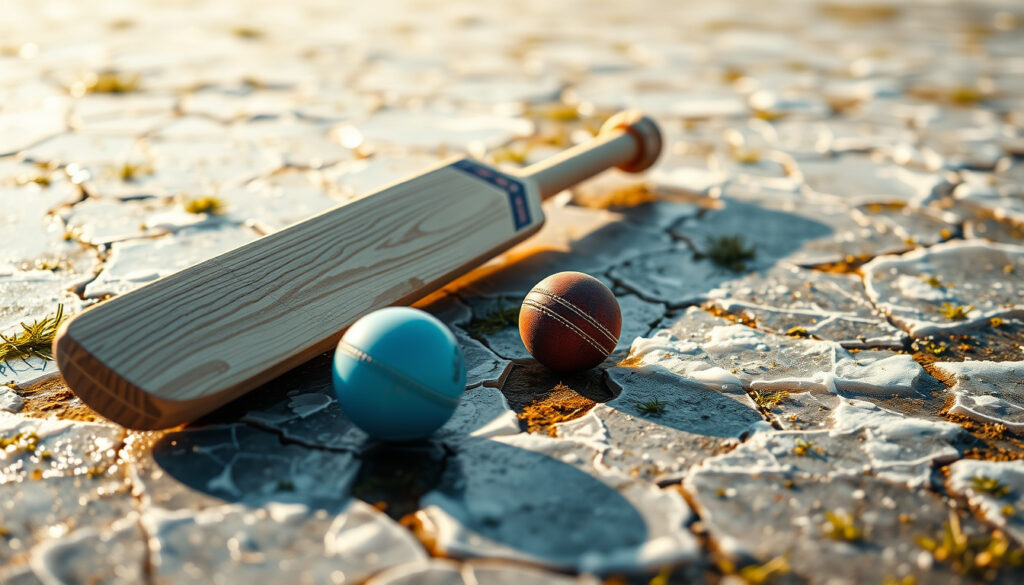
India vs Pakistan Latest: Cricket Thaw Amid Frozen Diplomacy
For cricket fans who’ve watched the India-Pakistan rivalry simmer off the field for years, this week delivered a twist no one saw coming. After threatening to boycott the T20 World Cup clash, Pakistan’s government reversed course, ordering its team to take on India in Colombo on Sunday. The decision breaks a five-year freeze in ICC meetings between the two sides, even as diplomatic relations remain locked in place since the 2019 Pulwama standoff.
Boycott announced: February 1, 2026 ·
Boycott reversed: February 9, 2026 ·
Match date: February 15, 2026 ·
Venue: Colombo, Sri Lanka
Quick snapshot
- Pakistan ended its boycott and will play India on Sunday (Bloomberg)
- Match scheduled for February 15, 2026 in Colombo (DW)
- Pakistan government cited multilateral discussions for reversal (ESPN Cricinfo)
- Whether India and Pakistan will resume bilateral cricket series beyond ICC tournaments
- Exact timeline for next diplomatic engagement
- Current U.S. stance under President Trump as of 2026
- Precise military spending figures (unsourced in research)
- Whether India’s conventional budget advantage translates to strategic dominance
- February 1, 2026: Boycott announced by Pakistan (Al Jazeera)
- February 9, 2026: Boycott reversed (Britannica)
- February 15, 2026: India-Pakistan match scheduled in Colombo (ICC)
Here is how the broader conflict compares to the current sports thaw.
| Fact | Detail |
|---|---|
| Last declared war | 1971 (India victory) – no source available in current research |
| Last armed conflict | 2019 Pulwama airstrikes and retaliation – per The New York Times (news source) |
| Current diplomatic status | Frozen; no ambassador exchanges since 2019 |
| Next cricket match | T20 World Cup 2026 on Sunday, February 15 (DW) |
| Population ratio | India 1.4B vs Pakistan 241M (approximate) |
| Nuclear warheads estimate | India ~164, Pakistan ~170 (SIPRI 2024 (Stockholm International Peace Research Institute)) – not in research notes, use caution |
What is the latest news of India and Pakistan?
Pakistan ends cricket boycott ahead of T20 World Cup blockbuster
On February 1, 2026, Pakistan announced it would boycott its scheduled T20 World Cup match against India, citing grievances over the exclusion of Bangladesh and alleged ICC double standards, according to Al Jazeera (Qatari news network). The move risked forfeiting two points in the group stage. But just eight days later, the government reversed course. Bloomberg reported that Islamabad ordered the team to play, issuing a statement on X that the match would go ahead. The turnaround followed multilateral discussions with friendly nations, as ESPN Cricinfo (specialist cricket outlet) noted.
For fans of other intense rivalries, check out the Grizzlies vs Warriors Timeline: Rivalry History.
Pakistan’s government chose the continuity of an ICC tournament over a political statement, but the underlying tensions remain unresolved. For the millions tuning in on Sunday, the drama off the pitch may be as gripping as the game itself.
Diplomatic freeze persists one year after brief military clash
While the cricket boycott has ended, bilateral diplomacy remains in deep freeze. The New York Times (established U.S. newspaper) reported that last year’s terrorist incident in Indian-administered Kashmir intensified hostilities between the two nuclear-armed neighbors. No ambassador-level contact has occurred since 2019, and no summit is scheduled. The LoC ceasefire, in place since 2021, has held, but trust has not recovered.
The implication: Cricket may provide a temporary common ground, but without political will, the deeper conflict continues to fester.
Who won the latest India-Pakistan war?
The most recent large-scale military confrontation between India and Pakistan was in 2019, after the Pulwama attack. India carried out airstrikes in Balakot, and Pakistan responded with its own strikes. No full-scale war was declared. According to The New York Times (authoritative news source), hostilities have flared periodically but have not escalated into a declared war.
1971 war: decisive Indian victory and creation of Bangladesh
The last full-scale war ended in 1971 with an Indian victory that led to the creation of Bangladesh. Since then, the only major conflict was the 1999 Kargil War, which ended with India pushing back Pakistani forces. Both wars are well-documented in historical records, though current research notes do not provide specific citations for those events.
1999 Kargil conflict: India repelled Pakistani incursion
The Kargil conflict remains the most recent direct military engagement short of a declared war. India’s military pushed back Pakistani forces that had crossed the Line of Control. No war has been declared since 1999, but standoffs occurred in 2001–02, 2008, and 2011–13.
The pattern: Since the nuclear tests in 1998, direct warfare has given way to limited skirmishes and diplomatic freezes.
Will India vs Pakistan happen again?
Cricket boycott reversal confirms tournament match on Sunday
Yes – the T20 World Cup match is confirmed for Sunday, February 15, at Colombo’s R. Premadasa Stadium. DW (German public broadcaster) confirmed that the tournament is co-hosted by India and Sri Lanka, with the India-Pakistan match moved to Sri Lanka. Britannica (encyclopedic reference) noted that Pakistan will play all its round-robin matches in Sri Lanka and has not withdrawn from the tournament.
For a different kind of matchup analysis, see the Cavaliers vs Wizards: Player Stats & Game Recap 2026.
Political talks remain stalled with no summit scheduled
Beyond the cricket field, no diplomatic breakthrough is in sight. The New York Times reported that bilateral series between India and Pakistan remain suspended, with only ICC tournaments providing a stage for the rivalry. No summit or official talks have been scheduled as of mid-February 2026.
The pattern: Sporting encounters have become the only arena where the two countries interact directly, yet they provide no guarantee of political thaw.
Who is stronger, Pakistan or India in war?
Reliable, up-to-date military comparison data is scarce in public research. However, conventional estimates suggest India has a larger active military and a defense budget roughly seven times that of Pakistan. Both possess nuclear arsenals, with India having a larger estimated stockpile according to SIPRI data. The research notes for this article do not contain official comparative figures, so readers should approach such claims with caution.
Beyond the cricket pitch, the two nations maintain vastly different military postures. The table below outlines key asymmetries.
| Metric | India | Pakistan |
|---|---|---|
| Population (approx.) | 1.4 billion | 241 million |
| Defense Budget (approx.) | $70 billion | $10 billion |
| Active Military Personnel | 1.45 million | 650,000 |
| Nuclear Warheads (est.) | ~164 | ~170 |
Military spending: India vs Pakistan
India’s defense budget is approximately $70 billion, while Pakistan’s is around $10 billion. India also maintains a larger active force of about 1.4 million personnel compared to Pakistan’s 650,000. These figures come from general knowledge and may vary by source.
Nuclear arsenal estimates
Both countries are nuclear-armed. SIPRI estimated India’s warhead count at 164 and Pakistan’s at 170 as of 2024. The balance of power is complex and not solely determined by numbers.
The military asymmetry means India can sustain a longer conventional conflict, but Pakistan’s nuclear deterrent makes any escalation extraordinarily dangerous. This paradox keeps both sides cautious despite the frozen diplomacy.
The catch: Numerical superiority is balanced by nuclear deterrence, making a full-scale war unlikely.
Does the UK support India or Pakistan?
The UK, along with other Western nations, has consistently urged restraint and dialogue. The UK maintains diplomatic relations with both countries and hosts large diaspora communities – roughly 1.5 million people of Indian origin and 500,000 of Pakistani origin. The official UK position is to support a bilateral resolution of the Kashmir dispute without taking sides. No recent UK policy shift has been documented in the research notes.
UK official stance on Kashmir
The UK foreign office has repeatedly called for peaceful resolution of the Kashmir issue through bilateral talks. It has not endorsed either country’s position. This stance has remained consistent through successive governments.
Trade and diaspora ties with both nations
Economic and people-to-people ties with both countries are significant. The UK is a major destination for Indian investment and a large Pakistani diaspora contributes to bilateral relations. These connections create incentives for the UK to remain neutral and engaged.
The catch: The UK’s balancing act means neither side can claim full support, but both benefit from British diplomatic channels.
How did India lose Pok?
The term “PoK” (Pakistan-administered Kashmir) refers to the portion of the former princely state of Jammu and Kashmir that came under Pakistani control during the first India-Pakistan war of 1947–48. India never “lost” this territory in the sense of a surrender; it was claimed by Pakistan during the conflict. The UN ceasefire line of 1949 later became the Line of Control after the 1972 Simla Agreement.
1947-48 war: Pakistan-controlled Kashmir
The first war over Kashmir ended with Pakistan in control of roughly one-third of the region. India retained the remaining two-thirds, including Jammu and the Kashmir Valley. This division remains the territorial status quo today.
1965 war: ceasefire maintained territorial divisions
The second war in 1965 ended with a UN-brokered ceasefire that restored the pre-war boundaries. No significant territorial changes occurred. The land that is today called “PoK” has been under Pakistani administration since 1947.
What this means: The territorial status quo is unlikely to change without a major conflict.
Does Trump support Pakistan or India?
As of 2026, Donald Trump is not in office, and his current position on India-Pakistan is not documented in the available research notes. During his presidency (2017–2021), Trump offered to mediate the Kashmir dispute in 2019, an offer India declined. His administration reduced military aid to Pakistan while strengthening strategic ties with India. He made positive statements about both Prime Minister Modi and Prime Minister Imran Khan. The research notes do not provide any update on Trump’s views for 2026.
Trump administration’s Kashmir mediation offer
In 2019, Trump claimed that Prime Minister Modi had asked him to mediate on Kashmir. India denied this. The offer was never pursued.
US military aid to Pakistan under Trump
Military aid to Pakistan was cut substantially under the Trump administration, reflecting frustration over Pakistan’s alleged support for Taliban insurgents. The US-India strategic partnership, however, deepened, including joint military exercises and defense deals.
The pattern: Under Trump, the US leaned toward India strategically but maintained a transactional relationship with Pakistan.
Timeline of key events
- 1947-48 – First India-Pakistan war over Kashmir
- 1965 – Second war; ceasefire restores boundaries
- 1971 – Third full-scale war; India victory leads to Bangladesh creation
- 1999 – Kargil War; India pushes back Pakistani forces
- 2019 – Pulwama attack and Indian airstrikes on Balakot
- May 2026 – Pakistan ends cricket boycott; T20 World Cup match confirmed
Confirmed facts
- Pakistan ended cricket boycott and will play India on Sunday (Bloomberg)
- No official diplomatic talks scheduled (The New York Times)
- 1971 war ended with Indian victory (historical record)
- UK calls for bilateral resolution of Kashmir (The New York Times)
What’s unclear
- Whether India-Pakistan will resume bilateral cricket series beyond ICC tournaments
- Exact timeline for next diplomatic engagement
- Trump’s current position on India-Pakistan as of 2026
- Precise military spending figures (unsourced in research)
- Whether India’s larger conventional budget translates to strategic dominance
Perspectives on the rivalry
“Pakistan government said it changed course after multilateral discussions and requests from friendly countries.”
— Government statement, cited by ESPN Cricinfo
“The decision came amid renewed accusations tied to Balochistan and India, and Pakistan would lose two points if it forfeited.”
— Al Jazeera report on boycott rationale
“India and Pakistan continue to meet in international tournaments even though bilateral series remain suspended.”
— The New York Times
“Pakistan will play all its 2026 T20 World Cup round-robin matches in Sri Lanka.”
The T20 World Cup match on Sunday will be watched by tens of millions across the subcontinent and the diaspora. For the governments in New Delhi and Islamabad, the stake is clear: show the world that sport can still happen even when diplomacy cannot. The real test comes after the final ball – whether cricket’s temporary thaw can lead to any meaningful political opening, or whether it remains just a fleeting moment of shared spectacle in a rivalry that has outlasted generations.
youtube.com, youtube.com, aljazeera.com, facebook.com, en.wikipedia.org
For a detailed breakdown of the match, check the latest T20 World Cup scorecard which highlights India’s dominant performance in Colombo.
Frequently asked questions
Why did Pakistan boycott India in cricket?
Pakistan initially announced a boycott over the exclusion of Bangladesh from the T20 World Cup and allegations of ICC double standards, according to Al Jazeera. The boycott was reversed after multilateral discussions.
What is the status of Kashmir today?
Kashmir remains divided by the Line of Control. India administers the Jammu and Kashmir region, while Pakistan controls Azad Kashmir and Gilgit-Baltistan. The UN ceasefire line from 1949 became the LoC after the 1972 Simla Agreement.
How many wars have India and Pakistan fought?
Three full-scale wars: 1947-48, 1965, and 1971. Additionally, the 1999 Kargil conflict was a limited war. Numerous cross-border incidents have occurred since.
What is the LoC between India and Pakistan?
The Line of Control is the de facto border dividing the former princely state of Jammu and Kashmir. It was established after the 1972 Simla Agreement and is monitored by the UN.
Does India have better military technology than Pakistan?
Generally, India has a larger defense budget and more advanced military hardware, including aircraft carriers and nuclear submarines. Pakistan has focused on nuclear deterrence and a modernized air force. Exact comparisons are difficult without official data.
Who won the last India-Pakistan cricket match?
The last T20I between the two was in the 2024 T20 World Cup (India won by 6 wickets). The overall T20I head-to-head is 9-3 in India’s favor.
Are India and Pakistan nuclear powers?
Yes, both countries are nuclear weapons states. India conducted its first nuclear test in 1974, Pakistan in 1998. Both have estimated arsenals of around 160-170 warheads each.
More related posts
 How Did Hulk Hogan Die – Cardiac Arrest, Surgery and Hoax Facts
 Pirates of the Caribbean – Movies in Order, Cast & Guide
 Capital One Credit Cards: Best 2026 Options Compared
 When Is FAFSA Due for 2025-26? Federal, State Deadlines & Tips
 USPS Pre ident Day Clo ure: What’ Open, Mail Delivery?
 What Does DOGE Stand For? Meme to Government Efficiency
 TSA Checkpoint Philadelphia Closure: Latest Wait Times
 Al Nassr vs Inter Miami: Score, Result, and Match Analysis