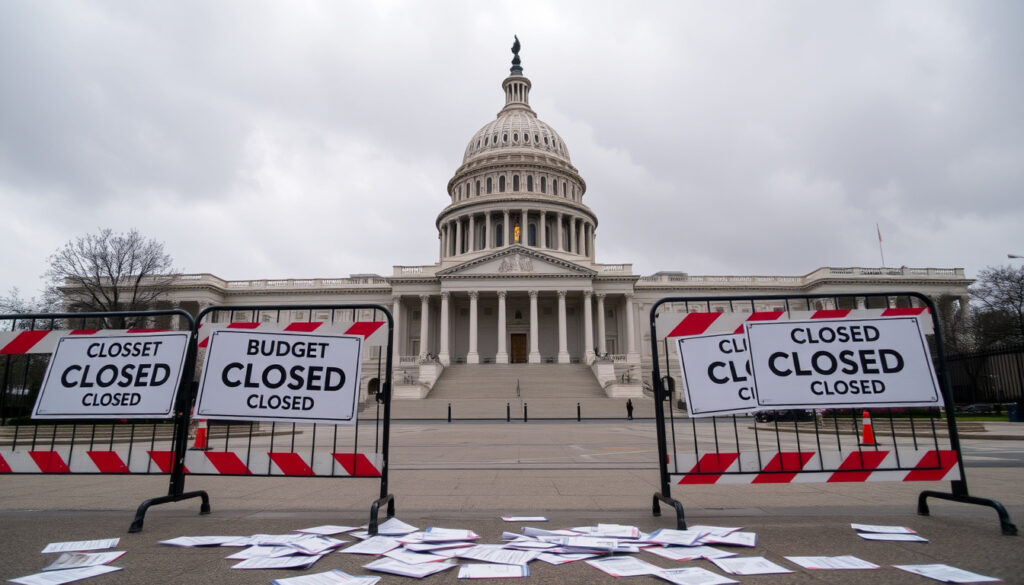
Why Is ‘Government Shutdown 2026’ Trending? Causes and Updates
The US federal government endured two shutdowns in early 2026—the second stretching 76 days and becoming the longest partial closure in American history—triggered by an immigration enforcement funding battle that killed a border agent and stopped pay for thousands of TSA workers.
Shutdowns in 2026: Two incidents · First lasted: 4 days (Jan 31–Feb 3) · Second lasted: 76 days (Feb 14–Apr 30) · Trigger: Immigration enforcement dispute
Quick snapshot
- Jan 24, 2026: Alex Pretti killing by CBP agents (Wikipedia)
- Jan 31: First shutdown began at 12:01 a.m. (Duke Government Relations)
- Feb 14: Second DHS shutdown began (Georgia DOL)
- Apr 30: Second shutdown ended (Paychex)
Why would the US government shut down?
The US federal government shuts down when Congress fails to pass appropriations bills that fund government operations. Without these spending bills, agencies must halt non-essential functions and send home workers who aren’t deemed critical to safety or national security. Funding expired on October 1, 2025, triggering a prior shutdown that ended November 9 with a continuing resolution lasting until the end of January 2026.
Budget funding deadlines
Congress operates under hard deadlines. When the previous continuing resolution expired, lawmakers had to either pass full appropriations bills or agree on another extension. By January 22, 2026, the House had passed the final six of twelve annual appropriations bills, but the Senate hadn’t moved on corresponding DHS funding.
Congressional disputes
The core fight centered on immigration enforcement funding. Republicans pushed for continued funding of ICE and CBP operations without new safeguards against misconduct, while Democrats demanded reforms attached to any DHS appropriations. Negotiators managed to reach a deal on January 29, 2026, passing five bills plus a two-week DHS continuing resolution, but the underlying dispute never fully resolved.
Has the 2026 federal budget passed?
No comprehensive federal budget has passed as of the second shutdown’s end in April 2026. The House advanced a Republican budget framework that unlocks reconciliation for immigration enforcement funding, but the process remains ongoing. The budget resolution targets up to $140 billion for immigration enforcement, though analysts expect the final figure closer to $70 billion.
Current negotiations
Committees must submit their portions of the budget reconciliation by May 15, 2026, ahead of Trump’s June 1 deadline. The House-passed framework would fund three years of immigration enforcement operations, with Utah’s House delegation among those supporting the resolution. Committees are now working to flesh out specific allocation details within the prescribed timeframe.
Key sticking points
Senate Democrats have consistently opposed funding DHS without protections against misconduct. Speaker Mike Johnson rejected a bipartisan Senate DHS funding bill that had broader support, a decision that Rep. Brittany Pettersen called “forcing the longest government shutdown in American history because of their refusal to work with Democrats.”
What actually shuts down during a government shutdown?
Not everything stops. During a government shutdown, agencies distinguish between essential and non-essential services. Essential personnel—such as air traffic controllers, TSA officers, and border patrol agents—continue working, though many do so without immediate pay. Non-essential employees are furloughed, meaning they stay home and wait for back pay to be authorized once funding resumes.
Essential vs non-essential services
The first 2026 shutdown affected approximately half of federal departments because no full appropriations had passed. The second shutdown was more targeted—it limited the closure to DHS-specific agencies. Trump signed an executive order on March 27, 2026, that resumed TSA payroll from March 30, allowing Transportation Security Administration officers to receive pay during the ongoing DHS-only shutdown.
Affected agencies
During the second DHS-focused shutdown, several agencies faced direct impacts: TSA screeners, FEMA grant programs, CISA cybersecurity operations, Secret Service protective details, Coast Guard operations, ICE detention and removal functions, and CBP border enforcement all experienced funding gaps. The Georgia Department of Labor issued specific guidance noting these agencies would have limited operations during the shutdown period.
How bad is it if the US government shuts down?
The impact ranges from inconvenient to serious, depending on the duration and which services are affected. During the first four-day shutdown in January-February 2026, federal workers faced delayed paychecks and uncertainty about when they’d return to fully funded operations. The Social Security Administration warned of impacts starting January 31, 2026, noting that certain benefit processing could face delays.
Economic effects
Extended shutdowns carry measurable economic costs. Federal workers on furlough don’t spend money, contractors lose income immediately, and government contractors face cash flow problems even after funding resumes. The 76-day DHS shutdown became the longest partial shutdown in US history on March 27, 2026, surpassing previous records. The National Immigration Law Center warned that the FY2026 DHS bill would give ICE and CBP hundreds of millions more amid documented violence by those agencies.
Public services disruption
TSA officers working without pay during the second shutdown faced personal financial strain. Travel delays can accumulate when agencies can’t hire or train new personnel. Grant programs through FEMA and other agencies face delays, affecting state and local governments that depend on federal funding for ongoing projects. The 2025 One Big Beautiful Bill Act had provided a separate funding pool for immigration agencies, which mitigated some impacts during the first shutdown period.
What is the disagreement causing the government shutdown?
The fundamental dispute centers on whether immigration enforcement funding should come with attached reforms. Democrats, particularly after the January 24 killing of Alex Pretti by CBP agents, demanded that any DHS funding include safeguards against misconduct. Republicans insisted on continuing current CBP and ICE funding levels without new conditions.
Immigration reforms
The killing of Alex Pretti prompted Senate Democrats to withdraw support for the DHS bill entirely, triggering the second shutdown that began February 14, 2026. Congressional Democrats argued that the killing demonstrated ongoing accountability problems within CBP and that blank-check funding without reforms was unacceptable. A House Appropriations Committee hearing explored these blocking tactics, with members citing the need for oversight mechanisms before additional immigration enforcement funding could proceed.
Funding bills involved
The budget framework advancing through reconciliation includes up to $140 billion for immigration enforcement over three years, though fiscal analysts expect the actual allocation closer to $70 billion. Rep. Pettersen voted against the budget resolution specifically citing the “$70B ICE/CBP expansion” without reforms. The House has supported this framework, but Senate passage remains uncertain given Democratic opposition.
House Republicans forced the longest government shutdown in American history because of their refusal to work with Democrats on DHS funding, according to Rep. Brittany Pettersen’s April 30, 2026 statement. The choice for lawmakers now is straightforward: pass immigration enforcement funding with misconduct protections, or trigger another shutdown.
The $140 billion reconciliation framework represents the largest immigration enforcement funding push in recent history. Whether it passes with reforms attached determines whether the underlying policy disputes get resolved or simply deferred until the next funding deadline.
Timeline of 2026 government shutdowns
Three distinct periods shaped the 2026 shutdown landscape, with the longest DHS-only closure setting a new record.
| Date/Period | Event | Source |
|---|---|---|
| October 1, 2025 | Funding expired, triggering prior shutdown | CRFB |
| November 9, 2025 | 2025 shutdown ended with CR until end of January 2026 | Wikipedia |
| January 22, 2026 | House passed final six appropriations bills | Wikipedia |
| January 24, 2026 | Alex Pretti killed by CBP agents | Wikipedia |
| January 31, 2026 | First shutdown began at 12:01 a.m.; Social Security Administration warned of impacts | Duke Government Relations, SSA |
| February 5, 2026 | Trump signed funding package, ending first shutdown | Duke Government Relations |
| February 14, 2026 | Second DHS shutdown began at 12:01 a.m.; impacted TSA, FEMA, CISA, Secret Service, Coast Guard, ICE, CBP | Georgia DOL |
| March 27, 2026 | Trump signed executive order resuming TSA payroll from March 30; second shutdown became longest in US history | Wikipedia |
| March 29, 2026 | Second shutdown surpassed 2025 shutdown length | Wikipedia |
| April 30, 2026 | Trump signed DHS funding bill, ending second shutdown after 76 days | Paychex, Rep. Pettersen Office |
The implication: each milestone in the timeline—from the Pretti killing to the March 27 executive order—marked escalation points where one side refused to yield on immigration enforcement reforms.
What we know versus what remains unclear
Two distinct facts are confirmed, while several questions remain open.
Confirmed
- Two federal government shutdowns occurred in 2026, both stemming from immigration enforcement funding disputes
- The second DHS-only shutdown lasted 76 days, making it the longest partial shutdown in US history
Unclear
- Exact economic cost of the two 2026 shutdowns combined
- Whether budget reconciliation will resolve the underlying immigration enforcement policy disputes or simply defer them
- What specific Democratic reform proposals were formally proposed and rejected
What people are saying
Instead of working with Democrats to bring necessary reforms to ICE, Republicans are abusing the legislative process to give $70 billion to Trump’s lawless operations.
— Rep. Brittany Pettersen (US Representative, CO-07), Congressional statement, April 30, 2026
House Republicans have forced the longest government shutdown in American history because of their refusal to work with Democrats on a bipartisan DHS funding bill.
— Rep. Brittany Pettersen (US Representative, CO-07), Congressional statement, April 30, 2026
They’re blocking this bill because they will not allow any funding for the Department of Homeland Security to move forward unless it also includes funding for ICE and CBP without any new protections against the misconduct.
— Congressional member, House Appropriations Committee hearing
Bottom line
Two federal shutdowns in 2026—both triggered by immigration enforcement funding disputes—bookended the year’s first quarter. The second DHS-only shutdown stretched 76 days, setting a record for partial shutdowns. For travelers and federal workers, the immediate disruption is over, but the policy fight continues: budget reconciliation committees must submit proposals by May 15, 2026, ahead of a June 1 deadline, and whether they include misconduct protections will determine whether the next funding battle follows the same pattern.
Related reading: What Does DOGE Stand For? Meme to Government Efficiency
The 2026 trend echoes fears from the 43-day 2025 shutdown that paralyzed federal services for a record 43 days amid budget standoffs.
Frequently asked questions
How many days did the 2013 government shutdown last?
The 2013 shutdown under President Obama lasted 16 days, from October 1 to October 16. The 2026 second shutdown at 76 days was more than four times longer.
How long was the longest government shutdown?
The 2026 second DHS shutdown at 76 days became the longest partial government shutdown in US history, surpassing previous records. The 2018-2019 shutdown lasted 35 days and held the prior record for the longest total shutdown.
Who is affected by government shutdown 2026?
TSA officers, FEMA grant recipients, CISA cybersecurity staff, Secret Service agents, Coast Guard personnel, ICE detention operations, and CBP enforcement teams all faced impacts during the second DHS shutdown. Federal contractors and state governments awaiting grants also experienced delays.
Is the US government shutdown over?
The second DHS shutdown ended April 30, 2026, when Trump signed the DHS funding bill. However, the broader budget reconciliation process continues, with committees required to submit portions by May 15, 2026.
What bill is causing the government shutdown?
No single bill caused the shutdowns. The first stemmed from the overall failure to pass full appropriations by the January 31 deadline. The second resulted from the failure to pass a standalone DHS funding bill after the Alex Pretti killing prompted Democratic opposition.
What are we getting in budget 2026?
The House has advanced a budget framework unlocking up to $140 billion for immigration enforcement over three years, though analysts expect the final figure closer to $70 billion. The reconciliation process continues through the May 15 committee deadline.
Government shutdown 2026 update today?
The second DHS shutdown ended April 30, 2026. Current focus is on budget reconciliation with committees required to submit portions by May 15, 2026, ahead of Trump’s June 1 deadline for broader funding resolution.
More related posts
 Gone in 60 Seconds: Cage’s Stunts, Salary & Car Count
 Detroit Lions vs Minnesota Vikings Match Player Stats 2025
 Applebee’s Evansville Closing: Both Locations Shut Down 2026
 Dollar to Peso Exchange Rate: Buy & Sell Rates Today
 Peruvian Restaurant Near Me: Best Spots & Dishes in Dublin
 Jim Irsay Cause of Death: Pneumonia, Overdoses & FBI Probe
 UPS Drop Off Near Me: Ireland Locations & Returns Guide
 New Balance Women’s Shoes: Best Picks for Ireland