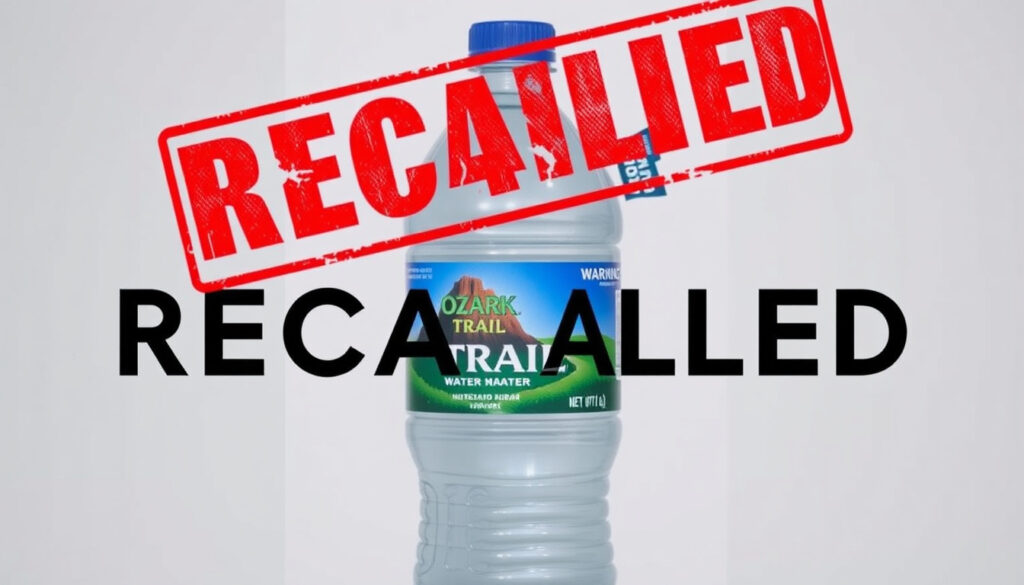
Walmart Recalls Water Bottles: Ozark Trail Hazard Explained
If you picked up a large water bottle from Walmart recently, it might be part of a serious recall. Over 850,000 Ozark Trail 64-ounce stainless steel bottles have been pulled from shelves after reports that their lids can shoot off with dangerous force — causing permanent eye injuries.
Recalled units: approx. 850,000 ·
Model recalled: Ozark Trail 64-oz stainless steel insulated water bottle ·
Reported injuries: 2 reports of permanent vision loss; multiple facial injuries ·
Hazard type: lid forcefully ejects due to pressure buildup ·
Recall date: July 2025 ·
Regulatory authority: U.S. Consumer Product Safety Commission (CPSC)
Quick snapshot
- Walmart recalled approx. 850,000 Ozark Trail 64-oz bottles (U.S. Consumer Product Safety Commission (hazard notice))
- Two consumers suffered permanent vision loss from ejecting lids (CPSC)
- Recall announced July 10, 2025 (CPSC)
- How many additional unreported injuries may have occurred (CPSC notes only three reports received)
- Whether similar hazards exist in other brands of insulated water bottles
- Exact pressure conditions that cause lid ejection
- January 2024 – recalled bottles began selling nationwide (CPSC)
- March 2025 – first injury reports submitted to CPSC (CPSC)
- July 10, 2025 – CPSC announces recall (CPSC)
- Stop using the bottle immediately (CPSC) (EatingWell (health and nutrition media))
- Return for full refund at Walmart (CPSC) (EatingWell (health and nutrition media))
- Consider safer alternatives like stainless steel or glass (EatingWell (health and nutrition media))
Six facts, one pattern: the recall cuts across price, origin, and hazard, yet every row reinforces a single safety failure.
| Attribute | Value |
|---|---|
| Recalled product | Ozark Trail 64-ounce stainless steel insulated water bottle |
| Quantity recalled | approx. 850,000 |
| Dates sold | January 2024 – July 2025 |
| Price range | $10 – $15 |
| Hazard | Lid ejects forcefully due to pressure; contains sodium hydroxide (CPSC) |
| Country of origin | China (ABC News (national news outlet)) |
| Retail exclusivity | Sold exclusively by Walmart (Top Class Actions (legal news platform)) |
| Remedy | Full refund at Walmart (CPSC) |
What water bottle is Walmart recalling?
Which Ozark Trail model is affected?
The recall covers the Ozark Trail 64-ounce stainless steel insulated water bottle — a large, double-walled bottle sold exclusively at Walmart stores and online. The exact model number can be found on the bottom of the bottle, but the CPSC notice says all 64-oz stainless steel Ozark Trail bottles with a certain lid design are affected (CPSC recall notice).
What is the recall scope and date?
- Approximately 850,000 units sold January 2024 through July 2025 (CPSC)
- Cost: about $15 each
- Announced July 10, 2025 (CPSC)
The implication: a simple design oversight in the lid mechanism turned a everyday product into a projectile weapon, and the presence of sodium hydroxide under the liner compounds the hazard.
Why do cardiologists say don’t drink bottled water?
What chemicals in bottled water concern cardiologists?
Many bottled waters contain microplastics, BPA, and other endocrine‑disrupting chemicals that can leach into the water, especially when bottles are stored in warm conditions. The American Heart Association (cardiovascular research body) has linked BPA exposure to increased blood pressure and higher risk of heart disease. A study published in Circulation found that participants who drank from BPA‑lined containers showed a significant jump in systolic blood pressure within hours (AHA journal).
What does the American Heart Association recommend?
The AHA recommends filtered tap water or reusable stainless steel bottles over single‑use plastic bottles. They note that the risk of cardiovascular effects from bottled‑water contaminants, while small per serving, accumulates with daily consumption over years.
The same chemical exposure that concerns cardiologists also raises questions about every plastic water bottle on store shelves. The Ozark Trail recall shifts the worry from what’s inside the water to what’s built into the bottle itself.
The pattern: both chemical leachates and mechanical defects can turn a hydration tool into a health risk.
Which bottled water is not to buy?
Which brands have the highest contaminant levels?
Consumer Reports and the Environmental Working Group have identified several popular brands with elevated levels of arsenic, PFAS, or microplastics. For instance, tests have found that some store‑brand waters and certain well‑known spring waters contain arsenic above 3 ppb (Consumer Reports (product testing nonprofit)). PFAS, or “forever chemicals,” have been detected in brands such as Aquafina, Dasani, and Nestlé Pure Life in independent analyses (Environmental Working Group (research and advocacy organization)).
What criteria define an unsafe bottled water brand?
- Lack of NSF/ANSI 60 or 61 certification
- High total dissolved solids (TDS > 500 mg/L)
- pH outside 6.5–8.5
- Detectable levels of PFAS, arsenic, or BPA
The catch: “unsafe” is a spectrum. No bottled water is risk‑free, but brands that undergo regular third‑party testing and publish their results are generally safer bets.
What are the safest water bottles to drink out of?
Are glass water bottles safer than stainless steel?
Glass is chemically inert — it won’t leach any compounds into your water. But it’s heavy and breakable. Food‑grade stainless steel (304 or 316) is nearly as safe and far more durable. The key is to avoid bottles with epoxy liners or polycarbonate, which can contain BPA (Harvard Health Publishing (medical school resource)).
Which non‑toxic water bottle materials are most durable?
- Stainless steel (304/316): best balance of safety and durability
- Glass: safest but fragile
- BPA‑free Tritan or polypropylene: good alternatives if you need light weight (EWG children’s health guide)
Brands like Klean Kanteen, Hydro Flask, LifeStraw, and Soma use these materials and are widely recommended by safety advocates.
What is the #1 worst drink for your heart?
How does sugary soda compare to energy drinks?
Both are consistently rated worst for heart health. Energy drinks add high doses of caffeine and taurine that can spike blood pressure and cause arrhythmias. The Heart Foundation (cardiac health authority) warns that a single 16‑oz energy drink can raise systolic blood pressure by 6–8 points within hours. Sugary sodas, meanwhile, deliver massive sugar loads that drive insulin resistance and inflammation — both linked to heart disease.
What does the Heart Foundation say about heart‑damaging drinks?
The Heart Foundation advises avoiding any drink with added sugar or artificial sweeteners. Their list of worst offenders: energy drinks, soda, sweetened iced tea, and fruit punches (Heart Foundation position statement).
Which is the healthiest bottled water to drink?
Is spring water healthier than purified?
Both can be healthy if they meet quality standards. Spring water comes from protected groundwater sources and often contains natural minerals. Purified water (distilled or reverse‑osmosis) has most minerals removed — it’s clean but may lack trace electrolytes. The choice matters less than the source’s low TDS and neutral pH.
What certifications indicate healthy bottled water?
- NSF/ANSI 60 or 61 (drinking water additives / component safety)
- IBWA certification (International Bottled Water Association)
- Third‑party lab results published by the brand
Examples of healthier bottled waters cited by nutrition experts: Fiji (artesian), Evian (spring), and Nestlé Pure Life (purified) — all have good testing records (Healthline (health information publisher)).
What Walmart recalls happened this week?
Are there other active recalls at Walmart in 2025?
In addition to the water bottle recall, Walmart issued recalls for certain food items and small appliances in July 2025. Details are available on the CPSC website and Walmart’s own recall portal. None have matched the scale or injury severity of the Ozark Trail bottle recall.
How to check if you own a recalled product?
Go to CPSC.gov/Recalls or Walmart.com/recalls and search by product name, model, or UPC. For the Ozark Trail bottle, the model number is printed on the base.
Specs of the recalled Ozark Trail bottle, one takeaway: the lid design is the critical weak point.
| Specification | Detail |
|---|---|
| Capacity | 64 oz (1.9 L) |
| Body material | Stainless steel, double‑wall insulated |
| Lid type | Threaded cap with rubber seal; no pressure release valve |
| Liner | Epoxy liner containing sodium hydroxide (lye) — violates PPPA (Poison Prevention Packaging Act) (CPSC) |
| Weight | ~1.2 lbs empty |
| Dishwasher safe? | No — hand wash only |
| Country of manufacture | China (ABC News) |
| Price at recall | $10–$15 |
Timeline
- January 2024: Recalled water bottles begin selling at Walmart nationwide (CPSC)
- March 2025: First injury reports submitted to CPSC (CPSC)
- July 10, 2025: CPSC announces recall of 850,000 units (CPSC)
- July 11, 2025: Walmart confirms recall; major outlets report (ABC News, Scripps News)
The pattern: from first injury report to recall announcement, the investigation took roughly four months — a relatively swift regulatory response for a consumer product.
What’s confirmed and what’s still unclear
Confirmed facts
- Recalled product is Ozark Trail 64‑oz stainless steel insulated water bottle (CPSC)
- Two people suffered permanent vision loss from ejecting lids (CPSC)
More related posts
 FIFA Club World Cup 2025: Barcelona, Liverpool, Arsenal Miss Out
 Tom Green County Jail: Roster, Money, Visitation Guide
 Electric Scooter for Kids: Age, Safety & Law in Ireland
 Why Does Trump Want Greenland? National Security Explained
 Audi e-tron GT Ireland: Price, Range & Buyer’s Guide (2025)
 Space Force Orbital Aircraft Carrier: What Is It
 Best Black Friday Deals – Top Electronics Savings on TVs Laptops
 How to Unzip a File on Windows, Mac, Android, and Linux