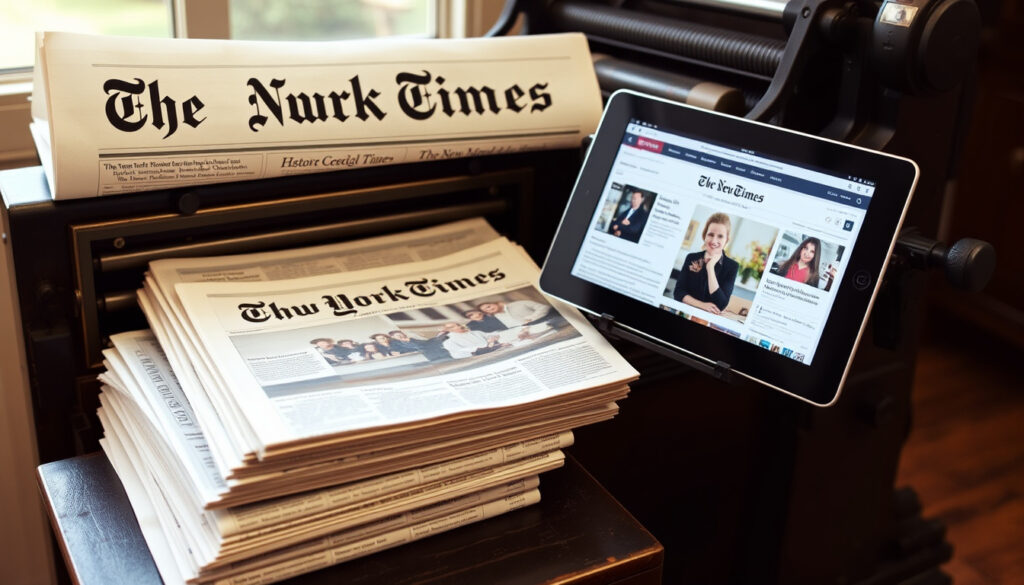
The New York Times: History, Credibility, Products & Access Guide
There’s a reason so many readers keep turning to The New York Times, even in an age of 24-hour digital noise: since its first edition in 1851, the paper has built a reputation for serious, deep reporting that few others match. With 138 Pulitzer Prizes and a newsroom of 1,700 journalists worldwide, it remains one of the most influential news organizations on the planet — and this guide walks you through its history, credibility, products, and access.
Founded: 1851 · Headquarters: New York City, New York, U.S. · Daily circulation (print + digital): Approximately 8 million · Journalists worldwide: 1,700 · Pulitzer Prizes won: 138 (as of 2024) · Owner: The New York Times Company (controlled by Sulzberger family)
Quick snapshot
- Founded in 1851 as The New-York Daily Times (The New York Times Company – official history)
- Renamed in 1857 and became a national institution (The New York Times Company – official history)
- Under Sulzberger family control since 1896 (The New York Times Company – official history)
- Highly regarded for journalistic standards (Encyclopaedia Britannica – authoritative reference)
- 138 Pulitzer Prizes – more than any other newspaper (The New York Times Company – official history)
- Rigorous fact-checking and corrections policy (The New York Times Company – official history)
- ePaper (digital replica of print) (The New York Times Help Center – official support)
- NYT Games (Wordle, Spelling Bee, etc.) (The New York Times Company – timeline)
- The New York Times Magazine (The New York Times Company – official history)
- NYT Now Live video (The New York Times Company – timeline)
- Digital subscription starting at ~$4/week (The New York Times – gift subscriptions page)
- ePaper included in print+digital (The New York Times Help Center – official support)
- Available on web, iOS, Android (The New York Times Help Center – official support)
Eight key facts about The New York Times at a glance:
| Attribute | Value |
|---|---|
| Founded | 1851 |
| Founded by | Henry Jarvis Raymond and George Jones |
| Headquarters | 620 Eighth Avenue, New York City |
| Current Publisher | A.G. Sulzberger |
| Executive Editor | Joseph Kahn |
| Daily circulation (print + digital) | Approximately 8 million (2024) |
| Number of employees | Over 5,000 (including 1,700 journalists) |
| Pulitzer Prizes | 138 (most by any newspaper) |
Is The New York Times credible?
How does The New York Times ensure accuracy?
- The paper maintains a rigorous fact-checking process that involves multiple layers of review before publication (The New York Times Company – official corporate history).
- It has a public corrections policy, with corrections printed in the paper and appended online.
- Editors and reporters follow an extensive Ethical Journalism handbook (NYT Company timeline).
What are its journalistic standards?
- The Times pledges to report news impartially, “without fear or favor,” a creed set by Adolph Ochs in 1896 (The New York Times Company – official history).
- It avoids sensationalism and focuses on “deep, serious-minded reporting” that appeals to a cultured, intellectual readership (Encyclopaedia Britannica – authoritative reference).
- News coverage is separated from opinion, with clear labels for editorials, columns, and analysis.
How many Pulitzer Prizes has it won?
- As of 2024, The New York Times has won 138 Pulitzer Prizes – more than any other newspaper (The New York Times Company – official history).
- Notable wins include the 1972 Pentagon Papers award, 2018 for reporting on Harvey Weinstein, and 2021 for COVID-19 coverage.
With 138 Pulitzers, NYT isn’t just credible – it’s the benchmark. For readers, that track record translates into lower risk of misinformation than most other outlets, though no newsroom is infallible.
The pattern: The New York Times’ credibility rests on a century-old impartiality pledge, a layered fact-checking system, and an unmatched collection of journalism prizes. That combination makes it the go‑to “paper of record” for millions.
What was The New York Times called in 1851?
Who founded The New York Times?
- The paper was founded by Henry Jarvis Raymond and George Jones (The New York Times Company – official history).
- Raymond was a journalist and politician; Jones was a former banker.
How did the newspaper evolve after its founding?
- First issue published on September 18, 1851, as The New-York Daily Times (Encyclopaedia Britannica – authoritative reference).
- It was founded as a penny paper that avoided sensationalism and reported news in a restrained, objective fashion (Encyclopaedia Britannica – authoritative reference).
- Renamed to The New York Times in 1857 (The New York Times Company – official history).
When did it change to its current name?
- The name changed from The New-York Daily Times to The New York Times in 1857, seven years after the first issue (The New York Times Company – official history).
The implication: The Times’ early choice to target educated readers rather than the masses set a tone that still defines its editorial identity today. That strategic decision – reinforced by the Ochs family’s “without fear or favor” pledge – turned a penny paper into an institution.
What happened to The New York Times?
How did The New York Times adapt to digital?
- On March 28, 2011, NYT put most of its digital content behind a paywall, a move that initially drew skepticism but eventually brought millions of paying subscribers (The New York Times Company – timeline).
- The digital subscription model made quality journalism financially sustainable; by 2024 the paper reported over 10 million digital-only subscribers.
- It acquired product review site Wirecutter in 2016, adding a new revenue stream and audience (The New York Times Company – timeline).
What major events affected the NYT in recent years?
- The COVID-19 pandemic led to layoffs and a temporary hiring freeze in 2020, but the paper rebounded as digital subscriptions surged.
- In 2022 it acquired Wordle, the viral word game, for a low seven‑figure sum and integrated it into NYT Games (The New York Times Company – timeline).
- NYT has faced ongoing challenges from social media platforms and AI‑generated content, but it has maintained its paid subscriber base by emphasizing original, trustworthy reporting.
What is the current state of the newspaper?
- As of 2024, The New York Times employs over 5,000 people, including 1,700 journalists (The New York Times Company – timeline).
- It operates a successful digital subscription business with more than 10 million paid digital subscribers, making it one of the few newspapers to thrive in the digital age.
- Print circulation has declined, but the ePaper and digital platforms have filled the gap.
NYT’s digital success comes at a cost: a strict paywall means casual readers must pay for access. For heavy news consumers, the subscription is a bargain; for occasional visitors, it’s a barrier that pushes them to free competitors.
What this means: The New York Times is no longer just a newspaper – it’s a multi‑product media company that has proven that quality journalism can be economically viable in the digital era, albeit behind a subscription wall.
How can I access The New York Times ePaper?
How to subscribe to The New York Times?
- Choose a plan at nytimes.com/subscription. The Family plan offers an introductory rate of $8 every 4 weeks for the first 6 months, then $35 every 4 weeks (The New York Times – official subscription page).
- The Gift subscription starts at $4.00 every 4 weeks for 6 months (The New York Times – gift subscriptions page).
- Manage or change your subscription through the account page at help.nytimes.com (The New York Times Help Center – official support).
How to read NYT on mobile?
- Download the free NYT app from the iOS App Store or Google Play.
- Subscribers can read full articles, the ePaper, and play Games through the app.
- The ePaper is a digital replica of the print edition, available on desktop browsers and mobile devices (The New York Times Help Center – official support).
What devices support the ePaper app?
- iOS, Android, and any modern desktop browser.
- Offline reading is supported on mobile devices (The New York Times Help Center – official support).
The catch: While the ePaper is a great way to get a tactile newspaper experience on a screen, it’s locked behind a subscription. Free access is limited to a few articles per month unless you’re a home delivery or All Access subscriber.
What are NYTimes Games?
What games does The New York Times offer?
- Wordle, Spelling Bee, The Mini Crossword, Letter Boxed, Tiles, Vertex, and Sudoku (The New York Times Company – timeline).
- New puzzles are released every day at midnight.
How to play Wordle, Spelling Bee, and Mini Crossword?
- Wordle is free to play on the NYT Games website or app with daily ads; a Games subscription removes ads and gives unlimited access to archives.
- Spelling Bee and The Mini Crossword are included in the free tier (with ads); the full Crossword archive requires a subscription.
Are NYT Games free or paid?
- Some games are free with advertising; others (like the full Crossword and Spelling Bee hints) require a NYT Games subscription or an All Access subscription.
- The NYT Games subscription is separate from the news subscription, though bundled options exist.
Why this matters: NYT Games turned into a major acquisition and loyalty driver. Wordle alone brought millions of daily visitors to the NYT ecosystem – many of whom later converted to news subscribers.
Who owns The New York Times?
Who controls the New York Times Company?
- The New York Times Company is controlled by the Sulzberger family through a two-class stock structure that gives Class B shares 10 votes each (The New York Times Company – official history).
- The Ochs-Sulzberger family has controlled the paper since Adolph Ochs purchased it in 1896 (The New York Times Company – official history).
Is the Sulzberger family still involved?
- Yes. A.G. Sulzberger became the publisher in 2018, the fifth generation of the family to lead the newspaper (The New York Times Company – timeline).
- The family’s control insulates the newsroom from shareholder pressure for short-term profits.
What is the ownership structure?
- Publicly traded (NYSE: NYT) but dual-class shares concentrate voting power with the Sulzberger family.
- Non-family shareholders own the majority of economic value but have limited voting influence.
The pattern: The Sulzberger family’s control has been a double‑edged sword: it preserves editorial independence from Wall Street, but it also concentrates power in a single family – a governance model that critics say lacks accountability.
Timeline signal
- – First issue published as The New-York Daily Times (NYT Company history).
- – Renamed to The New York Times (NYT Company history).
- – Adolph Ochs purchases The New York Times, establishes family control (NYT Company history).
- – Publishes the Pentagon Papers; wins landmark Supreme Court case on freedom of the press (Encyclopaedia Britannica – reference).
- – Introduces a digital subscription (paywall) (NYT Company timeline).
- – Acquires product review site Wirecutter (NYT Company timeline).
- – Acquires Wordle, integrates into NYT Games (NYT Company timeline).
- – Surpasses 10 million digital-only subscribers (NYT Company timeline).
What we know for sure vs. what remains unclear
Confirmed facts
- The New York Times was founded in 1851 as The New-York Daily Times (NYT Company history).
- It is owned by The New York Times Company, controlled by the Sulzberger family (NYT Company history).
- It has won 138 Pulitzer Prizes as of 2024 (NYT Company history).
- NYT launched a digital subscription in 2011 (NYT Company timeline).
- A.G. Sulzberger is the current publisher (NYT Company timeline).
What’s unclear
- Exact current daily print circulation numbers vary by report.
- Future ownership structure changes remain speculative.
- Impact of AI on news consumption patterns for NYT is still unfolding.
- Long-term impact of AI on NYT’s advertising revenue is uncertain.
- The exact financial details of the Wordle acquisition are not disclosed.
Voices on The New York Times
“Our mission is to seek the truth and help people understand the world.”
— A.G. Sulzberger, publisher of The New York Times (NYT Company history)
“The New York Times is widely considered the newspaper of record in the United States, with a history of independent, high‑quality journalism.”
— Encyclopaedia Britannica (Britannica – reference)
For readers weighing a subscription, the choice is clear: NYT offers unmatched depth and authority, but it also demands a commitment to paying for quality journalism. Those who value independent, fact‑checked reporting will find the investment worthwhile; those who expect free news will need to look elsewhere – or risk losing access to one of the few remaining independent newsrooms at scale.
Related reading: Antitrust Tech News Today · 30 Year Treasury Yield Today
help.nytimes.com, historic-newspapers.com, reddit.com, nytco.com, en.wikipedia.org, robertbryce.substack.com, help.nytimes.com
Frequently asked questions
How many Pulitzer Prizes has The New York Times won?
As of 2024, 138 Pulitzer Prizes – more than any other newspaper (NYT Company history).
What is the difference between The New York Times and The Wall Street Journal?
The New York Times covers a broad range of news with a liberal‑leaning editorial page; The Wall Street Journal focuses on business and finance with a conservative editorial stance. Both are highly credible.
Does The New York Times have a political bias?
Its news coverage aims for impartiality per its founding credo “without fear or favor,” though critics often perceive a liberal slant in its news selection. The editorial page is explicitly liberal.
How do I cancel my New York Times subscription?
You can cancel through the Account page at help.nytimes.com or by contacting customer service (NYT Help Center – official support).
What is the New York Times Best Sellers list?
A weekly list of the best‑selling books in the U.S., compiled by the NYT news survey department. It is widely considered the gold standard in publishing.
How can I contact The New York Times for corrections?
Corrections can be submitted via the “Contact Us” page at nytimes.com. The paper maintains a public corrections policy.
Is The New York Times available in languages other than English?
The main edition is in English, but NYT in Spanish (nytimes.com/es) and Chinese sections exist. The ePaper and mobile app default to English.
More related posts
 Connie Britton Movies and TV Shows – Roles and Where to Stream
 Los Angeles Rams vs Cleveland Browns Match Player Stats
 Words That Start With Z: Kids, Scrabble, Adjectives Lists
 Why Does Trump Want Greenland? National Security Explained
 Dollar to Peso Exchange Rate: Buy & Sell Rates Today
 GreenState Credit Union: Ownership, CEO, and Services
 Homemade Ice Cream Recipe: 5 Ingredients & No-Machine Tips