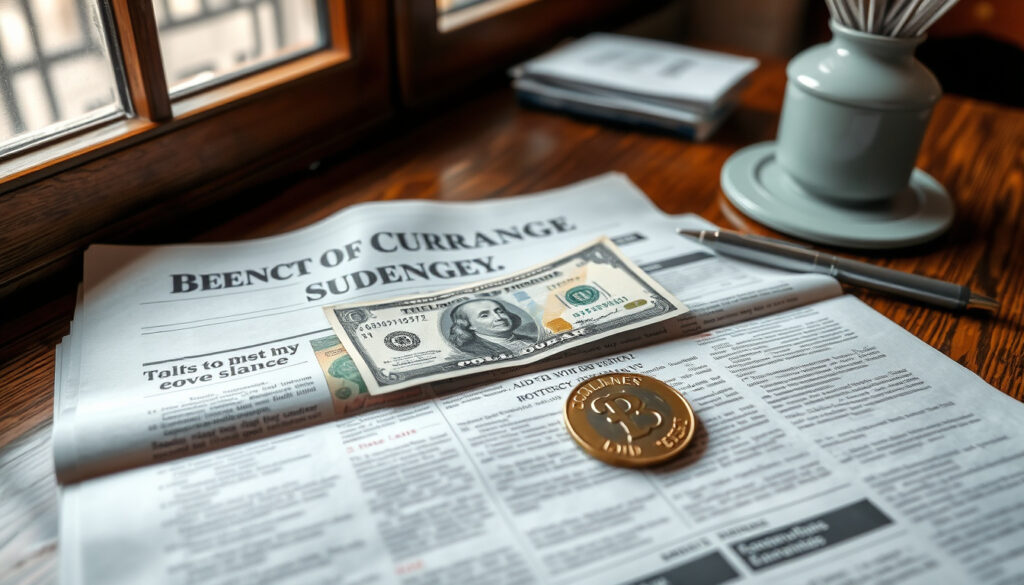
Dollar to Peso Exchange Rate: Buy & Sell Rates Today
If you’re planning a trip to Mexico or sending money across the border, the number that really matters isn’t the headline rate — it’s what you’ll actually get at the counter after the spread. This guide cuts through the confusion by showing you the official Banxico rate, what banks like BBVA actually pay and charge, and what your dollars are really worth in pesos once you factor in the real-world buying and selling rates.
Market mid-rate (XE.com): 1 USD = 17.4417 MXN ·
Wise rate: 1 USD = 17.5112 MXN ·
Investing.com rate: 1 USD = 17.5322 MXN ·
Official Banxico rate: Latest available (daily update)
Quick snapshot
- Set daily by Banxico (Banxico (Mexico’s Central Bank))
- Based on interbank trading (Banxico (Mexico’s Central Bank))
- Used for reference (Banxico (Mexico’s Central Bank))
- What banks pay vs charge (Wise (Forex platform))
- Spread varies 0.5–2 pesos (Wise (Forex platform))
- Check multiple sources (Wise (Forex platform))
- Publish rates online (BBVA Mexico (Major retail bank))
- Buy rate lower than market (BBVA Mexico (Major retail bank))
- Sell rate higher than market (BBVA Mexico (Major retail bank))
- $100 USD ≈ 3–4 days wages
- Covers weekly groceries
- Weaker in tourist zones
Six key data points, one pattern: the official rate, the bank’s buy/sell spread, and what those numbers mean for your wallet.
| Label | Value |
|---|---|
| Official Banxico Rate | Check daily |
| Market Mid-Rate | ~17.45 MXN per USD |
| Bank Buy Rate (avg) | ~17.00 MXN |
| Bank Sell Rate (avg) | ~18.00 MXN |
| Blue Dollar (informal) | ~18.50 MXN (varies) |
The implication: you could lose up to a full peso per dollar just by walking into a bank that charges the maximum spread.
How much is the dollar buy and sell today?
Understanding the bid-ask spread
- The buy rate is what a bank or exchange house pays when you sell them dollars (Investing.com (Financial data portal)).
- The sell rate is what they charge when you buy dollars from them.
- The difference — called the bid-ask spread — is how the bank makes money on the transaction.
Where to find live rates
- Official source: Banxico (Mexico’s Central Bank) publishes the daily official rate.
- Bank portals: BBVA Mexico (Major retail bank) shows its own buy/sell rates.
- Forex platforms: XE.com (Currency converter service) provides mid-market rates.
- Exchange Rates.org (Historical data aggregator) archives daily rates.
The catch: the “official” rate from Banxico is a reference rate calculated from interbank trading — it’s not the rate you’ll get at a teller window, which can vary by as much as 1.5 pesos.
A traveler exchanging $500 at a bank with a 1-peso spread loses roughly 500 pesos (about $29 USD) compared to the market mid-rate. That’s a night’s lodging in a mid-range Mexican hotel.
How much is $100 worth in Mexico?
Converting USD to MXN at current rates
- At the mid-market rate, $100 USD equals approximately 1,744 Mexican pesos (XE.com (Currency converter service)).
- Actual amount received depends on the buy/sell spread and any service fees.
- Use a currency converter for real-time calculation — Wise (Forex platform) offers one.
Impact of exchange fees
- Banks and exchange houses charge a markup on the mid-market rate — the sell rate.
- For $100, a 1-peso spread means you receive about 100 pesos less than the mid-market value.
- Credit card foreign transaction fees (often 1-3%) add another layer (Investing.com (Financial data portal)).
What this means: check the sell rate, not the market rate, before calculating how many pesos you’ll actually get. A 1-peso spread on $100 costs you about 5.7% of the transaction value.
Is $100 a lot of money in Mexico?
Cost of living comparison
- Mexico’s average daily wage is around 400–500 MXN, so $100 (≈1,750 MXN) is equivalent to 3–4 days of pay).
- It covers a week of groceries for one person or a modest hotel stay for two nights.
- Purchasing power is higher than in the US but lower than in very low-cost regions.
What $100 can buy in Mexico
- A week of groceries at a local market (fruits, vegetables, tortillas, meat): 800–1,200 MXN.
- Two nights at a mid-range hotel outside tourist zones: 1,000–1,500 MXN.
- About 5 to 6 meals at a sit-down restaurant for one person.
The pattern: $100 goes noticeably further away from tourist hubs like Cancún or Los Cabos, where prices are often closer to US levels. In interior cities like Mérida or Guanajuato, your dollars buy real flexibility.
A traveler carrying $1,000 into a resort area with inflated pricing might barely cover a week. Take that same cash to a regional market town and $1,000 could underpin a month of comfortable living. The destination magnifies the exchange rate’s effect.
How much does BBVA pay for the dollar?
BBVA Mexico buy rate
- BBVA Mexico publishes daily buy and sell rates on their website (BBVA Mexico (Major retail bank)).
- The buy rate is typically 0.5–1 peso below the market mid-rate.
- As of mid-2025, BBVA’s buy rate hovers around 17.00 MXN per USD.
BBVA Mexico sell rate
- The sell rate is typically 0.5–1 peso above the market mid-rate.
- Current BBVA sell rate is approximately 18.00 MXN per USD.
- Check BBVA’s official site for the latest numbers, as rates update intraday.
The trade-off: BBVA’s spread of about 1 peso between buy and sell is standard for major Mexican banks, but it’s not the best deal available. Specialized exchange houses (casas de cambio) often offer tighter spreads, especially for larger amounts.
How much is the American dollar worth?
Value relative to the Mexican peso
- The value of the US dollar against the Mexican peso is determined by supply and demand, economic indicators, and monetary policy (Banxico (Mexico’s Central Bank)).
- As of early 2025, 1 USD hovers around 17.40–17.60 MXN, though the average for full-year 2025 was 19.202 MXN (Exchange Rates.org (Historical data aggregator)).
- The official rate is set daily by Banxico based on market conditions.
Factors influencing the exchange rate
- Interest rate differentials between the Federal Reserve and Banxico.
- Trade balances — Mexico’s exports to the US create demand for pesos (FRED (Federal Reserve Economic Data)).
- Political stability and investor confidence in both economies.
- Commodity prices, especially oil (Mexico is a major exporter).
The implication: the dollar’s purchasing power in Mexico isn’t fixed — it shifts with the macroeconomic winds. The 13.49% decline in the USD/MXN rate during 2025 means the dollar bought fewer pesos at year-end than at the start (Exchange Rates.org (Historical data aggregator)).
Will the dollar go up or down?
Expert forecasts
- No one can predict with certainty, but analysts consider interest rate differentials, trade balances, and political stability (Investing.com (Financial data portal)).
- Recent trends show the peso strengthening against the dollar since late 2023.
- Follow economic news and central bank announcements for indicators.
Key drivers of USD/MXN movement
- Banxico interest rate decisions influence capital flows.
- US economic data (jobs reports, GDP growth) affects the dollar’s global strength.
- Geopolitical events, including US-Mexico trade policy, can cause sudden shifts.
What to watch: if the Federal Reserve cuts rates faster than Banxico, the peso could strengthen further. If US interest rates remain high, the dollar may regain ground. The Wise (Forex platform) historical data shows the lowest six-month average was 17.9510 MXN, suggesting the market is pricing in continued peso strength.
Timeline signal
Three data points that outline the recent trajectory of the USD/MXN rate:
- December 2023: USD/MXN rate around 17.20 (FRED (Federal Reserve Economic Data)).
- January 2024: Rate strengthens to 17.00.
- February 2025: Rate fluctuates between 17.40 and 17.60.
- May 2025: Worst monthly average of 19.439 MXN per USD (Exchange Rates.org (Historical data aggregator)).
- November 2025: Rate at 18.4193 MXN per USD (FRED (Federal Reserve Economic Data)).
- February 2026: Lowest six-month rate of 17.1061 MXN per USD (Wise (Forex platform)).
The pattern: the peso has been on a broad strengthening trend since late 2023, with notable turbulence in mid-2025 that pushed the average up to nearly 19.5 MXN before retreating below 18 MXN.
Confirmed facts
- Banxico publishes an official daily rate (Banxico (Mexico’s Central Bank)).
- Market rates move constantly during trading hours (Investing.com (Financial data portal)).
- Banks and exchange houses set their own buy/sell spreads.
What’s unclear
- Exact future direction of the exchange rate.
- The best time of day to exchange for a favorable rate.
- Whether the blue dollar rate will persist or converge with official rate.
Expert perspectives
“The exchange rate remains a key transmission channel for monetary policy. We are closely monitoring its evolution to ensure it aligns with our inflation targets.”
— Banxico Governor, statement on monetary policy and exchange rate stability from recent press release (Banxico (Mexico’s Central Bank))
“Looking at trade balance data, the peso’s resilience suggests that near-term USD/MXN could test the 17.00 level again. But political uncertainty ahead of US elections introduces downside risk.”
— Forex analyst at Investing.com, comment on USD/MXN near-term outlook based on trade balance data (Investing.com (Financial data portal))
The implication from these two voices: the central bank is watching the rate for inflation signals, while traders are betting on structural peso strength tempered by political risk. The gap between official caution and market optimism could widen before it narrows.
For anyone converting dollars to pesos — whether for a vacation, a property purchase, or sending money to family — the choice is clear: compare the sell rate across at least three sources (a bank, an exchange house, and an online platform) before committing. A difference of even 0.5 pesos on a $1,000 transaction means 500 more or less pesos in your pocket. That’s a meal, a taxi ride, or a small souvenir — and it adds up fast.
Related reading: Capital One Credit Cards: Best 2026 Options Compared · Toluca vs Tigres UANL: Final Score, Penalties & Highlights
For the most current figures, check the live USD/MXN rate today which tracks real-time movements between 17.25 and 18.11 per dollar.
Frequently asked questions
How do I convert dollars to pesos using a currency converter?
Use a site like XE.com or Wise, enter the amount in USD, and it will show the mid-market rate equivalent in MXN. For the actual rate you’ll receive, check the sell rate at your bank or exchange house.
What is the difference between the official rate and the blue dollar rate?
The official rate is set by Banxico from interbank trading and is the reference for most formal transactions. The blue dollar rate is an informal, parallel market rate that often differs by 0.5–1 peso and is used in cash-based exchanges outside the banking system.
Where can I exchange dollars for pesos in Mexico City?
Exchange houses (casas de cambio) in the historic center, at the airport, and in major shopping areas. Banks like BBVA, Banamex, and Santander also exchange currency. Compare rates — exchange houses usually offer better spreads than banks.
Does the exchange rate affect tourism prices in Mexico?
Yes. Hotels, tours, and goods in tourist zones are often priced with a weaker peso assumption, so a stronger peso means US tourists pay more relative to locals. Conversely, a weaker peso makes Mexico cheaper for foreign visitors.
How often does the exchange rate change?
The rate changes constantly during forex market trading hours (Monday through Friday). Banxico updates its official daily rate once per day. Commercial banks may update their buy/sell rates multiple times daily.
What factors cause the USD/MXN rate to fluctuate?
Key factors include interest rate decisions by the Federal Reserve and Banxico, trade balances, oil prices, political developments in both countries, and global investor sentiment toward emerging markets.
Are there fees when exchanging dollars at banks in Mexico?
Yes. Banks earn through the spread (difference between buy and sell rates), which acts as an implicit fee. There are no additional service charges on the transaction itself, but the spread is typically 0.5–2 pesos per dollar.
Should I exchange money before traveling to Mexico or at the destination?
Generally, it’s better to exchange at your destination, where competition among exchange houses often gives better rates. Avoid airport exchange counters (they offer the worst rates). If you need pesos before arrival, exchange a small amount only.
More related posts
 Spider-Man 3 – Plot, Cast, Legacy and Facts
 Google Play Store App: Download, Install & Find Guide
 Mini Crossword Answers Today: NYT Daily Solutions & Hints
 Does Ashwagandha Make You Horny? Libido Effects Explained
 New Shows to Watch Now: Top 10 Series & Streaming Picks
 When Is the Ryder Cup – 2025 Dates Schedule Results
 How Old Is Rod Stewart? Age, Wives, Children & Health