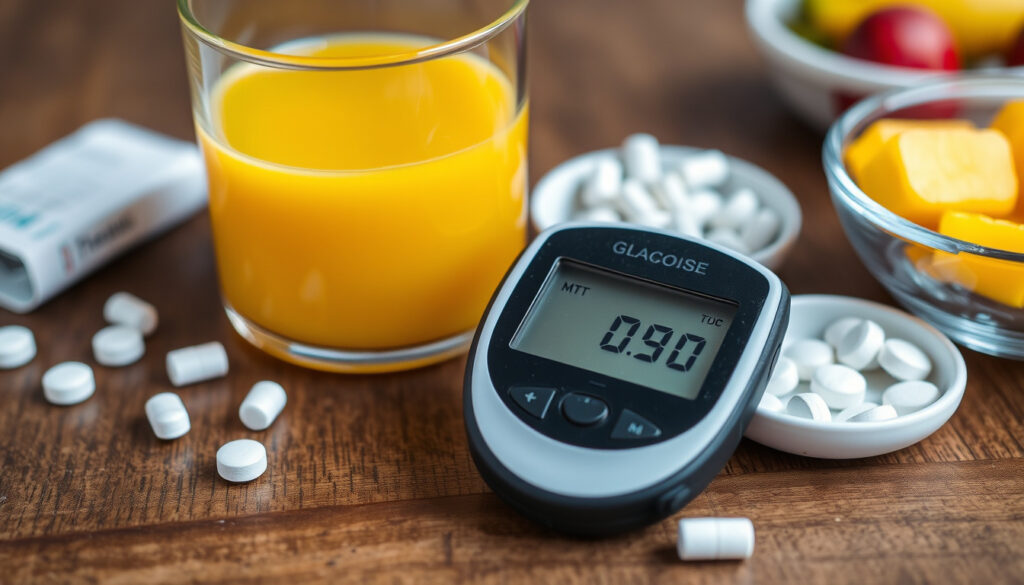
What Causes Low Blood Sugar? Causes & Treatment
Your hands tremble, you break into a sweat, and your thoughts start to scatter — that’s low blood sugar (hypoglycemia), and it’s more common than many realize, even in people without diabetes. Here’s what you need to know about why it happens and how to respond.
Hypoglycemia defined: Blood glucose below 70 mg/dL (3.9 mmol/L) ·
Severe hypoglycemia threshold: Below 54 mg/dL (3.0 mmol/L) ·
Most common cause in diabetes: Medication side effects (insulin, sulfonylureas) ·
Standard acute treatment: 15–15 rule: 15 g fast-acting carbs, recheck in 15 minutes
Quick snapshot
- Insulin or sulfonylurea overdose (CDC (U.S. public health agency))
- Missed or delayed meals (CDC (U.S. public health agency))
- Unexpected physical activity (CDC (U.S. public health agency))
- Alcohol consumption (U.S. Department of Veterans Affairs (federal healthcare provider))
- Excessive alcohol intake (StatPearls/NCBI Bookshelf (peer-reviewed medical resource))
- Critical illnesses (liver, kidney, heart) (StatPearls/NCBI Bookshelf (peer-reviewed medical resource))
- Insulinoma (Journal of Clinical Endocrinology & Metabolism (Endocrine Society peer-reviewed journal))
- Hormonal deficiencies (StatPearls/NCBI Bookshelf (peer-reviewed medical resource))
- Post-gastric bypass (StatPearls/NCBI Bookshelf (peer-reviewed medical resource))
- 15-15 rule: 15g fast carbs, recheck in 15 min (CDC (U.S. public health agency)) (Cleveland Clinic (academic medical center))
- Examples: glucose tablets (4), juice (120 ml), honey (1 tbsp) (Cleveland Clinic (academic medical center))
- If unconscious: glucagon or call 911 (American Diabetes Association (professional diabetes organization))
- Blood glucose below 54 mg/dL (Kaiser Permanente (large healthcare system))
- Loss of consciousness or seizure (Kaiser Permanente (large healthcare system))
- Unable to swallow safely (Kaiser Permanente (large healthcare system))
- Symptoms persist after treatment (Kaiser Permanente (large healthcare system))
Four key metrics, one pattern: the danger zone starts at 70 mg/dL, and the lower you go, the faster you need to act. Here’s a quick reference table.
| Metric | Value |
|---|---|
| Low blood sugar definition | <70 mg/dL (3.9 mmol/L) |
| Severe hypoglycemia threshold | <54 mg/dL (3.0 mmol/L) |
| Most common cause overall | Diabetes medication side effects |
| Leading non-diabetic cause | Excessive alcohol and critical illness |
What causes low blood sugar that’s not diabetes?
- Excessive alcohol consumption — drinking heavily without eating can deplete liver glycogen stores (StatPearls/NCBI Bookshelf (peer-reviewed medical resource)).
- Critical illnesses such as liver failure, kidney failure, and heart failure disrupt glucose production and regulation.
- Insulinoma — a rare pancreatic tumor that secretes excess insulin (Journal of Clinical Endocrinology & Metabolism (Endocrine Society peer-reviewed journal)).
- Hormonal deficiencies — low cortisol, glucagon, or growth hormone can impair glucose counter-regulation.
- Post-gastric bypass surgery — rapid gastric emptying can trigger reactive hypoglycemia.
- Certain medications — including quinolone antibiotics, pentamidine, and beta-blockers.
What does low blood sugar usually indicate?
In people without diabetes, recurrent hypoglycemia often signals an underlying problem. Reactive hypoglycemia, which occurs within 4 hours of eating, may be linked to diet or early metabolic changes. Fasting hypoglycemia — occurring after skipping meals or overnight — is more concerning and can point to an insulinoma, hormonal deficiency, or liver disease (Medical News Today (health news outlet)).
Is low blood sugar a symptom of anything?
Yes. Hypoglycemia can be a symptom of adrenal insufficiency, hypopituitarism, or a non-islet cell tumor. It can also result from bariatric surgery or excessive alcohol use. The U.S. Department of Veterans Affairs (federal healthcare provider) lists gastroparesis and lactation as additional triggers. If you don’t have diabetes and you’re experiencing hypoglycemia, it’s worth investigating the root cause with a healthcare provider.
For someone without diabetes, recurrent low blood sugar can signal a hidden problem — from an insulin-producing tumor to a hormonal deficiency. Ignoring it means missing a treatable condition.
The implication: If you don’t have diabetes and you’re experiencing hypoglycemia, it’s worth investigating the root cause with a healthcare provider.
What are 5 signs your blood sugar is too low?
- Shakiness or trembling (U.S. Department of Veterans Affairs (federal healthcare provider))
- Sweating, clamminess
- Fast heartbeat (palpitations)
- Hunger, nausea
- Irritability, confusion, difficulty concentrating
Mild hypoglycemia (54–70 mg/dL) typically produces these warning signs. As levels drop below 54 mg/dL, symptoms escalate: blurred vision, slurred speech, difficulty moving, and unusual behavior (U.S. Department of Veterans Affairs (federal healthcare provider)). Severe hypoglycemia can cause seizures, loss of consciousness, and death.
What organ is most affected by low blood sugar?
The brain. It relies almost exclusively on glucose for energy and cannot store it. Even a brief drop impair cognition. The Medical News Today (health news outlet) notes that confusion, inability to concentrate, and vision problems are direct neurological effects. People with long-standing diabetes may develop hypoglycemia unawareness, losing early warning signs and increasing the risk of severe episodes.
The same symptoms that warn you of danger — shakiness, sweating — can disappear with long-standing diabetes, leaving you vulnerable to severe hypoglycemia without warning.
The pattern: the brain is the first organ to fail when glucose runs low, and that’s why confusion or slurred speech demands immediate action.
What is commonly mistaken for low blood sugar?
- Anxiety or panic attacks — both cause shakiness, sweating, racing heart (Medical News Today (health news outlet)).
- Hyperventilation — rapid breathing can mimic hypoglycemia.
- Fainting (vasovagal syncope) — dizziness and lightheadedness.
- Seizures — especially focal seizures that cause confusion.
- Transient ischemic attack (TIA) — sudden weakness, confusion, speech difficulty.
- Heart arrhythmias — palpitations, chest discomfort, fatigue.
Definitive diagnosis requires a blood glucose test. The classic Whipple triad — symptoms of hypoglycemia, low plasma glucose (<55 mg/dL), and resolution after glucose administration — remains the gold standard (Journal of Clinical Endocrinology & Metabolism (Endocrine Society peer-reviewed journal)).
The catch: Without a blood glucose test, it’s easy to mistake an anxiety attack for hypoglycemia — and miss the real diagnosis.
What foods help raise blood sugar quickly?
- Glucose tablets (4 tablets, each ~4g) — fastest option (American Diabetes Association (professional diabetes organization)).
- Fruit juice or regular soda (½ cup / 120 ml).
- Honey or maple syrup (1 tablespoon).
- Raisins (2 tablespoons).
- Hard candies (5–6 pieces, chewed quickly).
Five common items, one rule: each provides exactly 15 grams of fast-acting carbohydrate. But not all carbs work the same.
| Food item | Amount for 15g carbs | Absorption speed |
|---|---|---|
| Glucose tablets | 4 tablets | Fastest |
| Fruit juice / regular soda | ½ cup (120 ml) | Fast |
| Honey / maple syrup | 1 tablespoon | Fast |
| Raisins | 2 tablespoons | Moderate |
| Hard candies | 5–6 pieces | Moderate |
What to eat when blood sugar is low?
Follow the 15-15 rule: eat 15 grams of fast-acting carbohydrates, wait 15 minutes, then recheck blood glucose. If still below 70 mg/dL, repeat. The CDC (U.S. public health agency) emphasizes that foods with fat, protein, or fiber — like chocolate, candy bars, or ice cream — slow absorption and should not be used for immediate treatment. Once blood sugar returns to safety, eat a balanced snack with protein and complex carbs to stabilize levels.
What to do when blood sugar is low
- Check your blood glucose if possible.
- Take 15 grams of fast-acting carbohydrates.
- Wait 15 minutes and recheck blood glucose.
- If still below 70 mg/dL, repeat steps 2–3 (CDC (U.S. public health agency)).
- Once in safe range, eat a snack with protein (e.g., peanut butter crackers, milk, cheese).
- If unconscious or unable to swallow, administer glucagon injection (if available) or call 911 (American Diabetes Association (professional diabetes organization)).
The 15-15 rule is your emergency brake — but only if you use the right fuel. Don’t grab a candy bar; its fat content delays absorption and can leave you low longer.
What level of low blood sugar is dangerous?
- Mild hypoglycemia: 54–70 mg/dL (3.0–3.9 mmol/L) — symptoms present but treatable.
- Severe hypoglycemia (Level 2): Below 54 mg/dL (3.0 mmol/L) — requires assistance from another person (American Diabetes Association (professional diabetes organization)).
- Very severe (Level 3): Any level with altered consciousness or seizure — medical emergency.
Nocturnal hypoglycemia — low blood sugar during sleep — is especially dangerous because many people don’t wake up. The Kaiser Permanente (large healthcare system) advises that if blood glucose is less than 54 mg/dL, 30 grams of fast-acting carbohydrate should be taken and the healthcare team contacted. Prolonged severe hypoglycemia can lead to brain damage, coma, and death.
Is low blood sugar dangerous?
Yes, especially when levels drop below 54 mg/dL. The brain cannot function without glucose, and extended deprivation triggers confusion, seizures, and unconsciousness. The CDC (U.S. public health agency) stresses that repeated episodes increase the risk of severe outcomes.
Can you die from low blood sugar in your sleep?
Yes. Nocturnal hypoglycemia can cause death if untreated. People with diabetes who take insulin or sulfonylureas are at highest risk, but non-diabetic individuals with fasting hypoglycemia or insulinoma are also vulnerable. Monitoring blood glucose before bed and having a snack may help prevent overnight drops.
What this means: Severe hypoglycemia is a medical emergency. The brain can’t store glucose, so prolonged low blood sugar can cause lasting damage.
Confirmed facts and what’s still unclear
Confirmed facts
- Hypoglycemia is defined as blood glucose <70 mg/dL (CDC (U.S. public health agency)).
- Severe hypoglycemia is <54 mg/dL (American Diabetes Association (professional diabetes organization)).
- Treatment: 15g fast-acting carbohydrates, recheck in 15 minutes (CDC (U.S. public health agency)).
- Diabetes medication is the most common cause overall (U.S. Department of Veterans Affairs (federal healthcare provider)).
What’s unclear
- Exact prevalence of non-diabetic hypoglycemia is uncertain due to underreporting.
- Mechanisms of reactive hypoglycemia are not fully understood (StatPearls/NCBI Bookshelf (peer-reviewed medical resource)).
- Optimal management of hypoglycemia unawareness remains under investigation.
- Whether non-diabetic hypoglycemia is becoming more common is not reliably tracked.
Expert perspectives
Treat low blood sugar with 15 grams of carbohydrates, wait 15 minutes, and recheck. If it remains below 70 mg/dL, repeat the process.
— CDC (U.S. public health agency)
The most common reason for low blood sugar is a side effect of medications used to treat diabetes.
For anyone without diabetes who experiences recurrent hypoglycemia, the choice is clear: seek a thorough medical evaluation, or risk missing a serious underlying condition that could be treated. Early detection of insulinoma, hormonal deficiencies, or reactive hypoglycemia can prevent complications and improve quality of life.
doclibrary-rcht.cornwall.nhs.uk, medlineplus.gov, pmc.ncbi.nlm.nih.gov, medicalnewstoday.com
Frequently asked questions
How can I prevent low blood sugar?
Eat regular meals and snacks, avoid skipping meals, limit alcohol, and monitor your blood glucose if you have diabetes. For non-diabetics, eating smaller, more frequent meals can help prevent reactive hypoglycemia (StatPearls/NCBI Bookshelf (peer-reviewed medical resource)).
Can low blood sugar occur without diabetes?
Yes. Non-diabetic hypoglycemia can result from excessive alcohol, critical illness, insulinoma, hormonal deficiencies, or post-gastric bypass surgery. It’s less common but requires medical investigation (Medical News Today (health news outlet)).
What is the 15-15 rule?
Eat 15 grams of fast-acting carbohydrates, wait 15 minutes, then recheck your blood glucose. If still below 70 mg/dL, repeat. The CDC (U.S. public health agency) recommends this as the standard acute treatment.
How do I check my blood sugar at home?
Use a blood glucose meter (glucometer) with a test strip and lancet. Clean the fingertip, prick the side, apply blood to the strip, and read the result. Continuous glucose monitors (CGMs) are also available for real-time tracking.
Is hypoglycemia the same as diabetes?
No. Diabetes is a chronic condition of high blood sugar. Hypoglycemia is low blood sugar, which can occur in people with diabetes (as a side effect of medication) and in people without diabetes (due to other causes).
What causes reactive hypoglycemia?
Reactive hypoglycemia occurs 2–4 hours after eating. It may be caused by an exaggerated insulin response, rapid gastric emptying (post-surgery), or early metabolic changes. The exact mechanisms are not fully understood (StatPearls/NCBI Bookshelf (peer-reviewed medical resource)).
Can stress cause low blood sugar?
Stress itself doesn’t directly cause low blood sugar, but it can affect appetite and eating patterns, which may lead to hypoglycemia. Severe stress or anxiety can mimic symptoms of low blood sugar (shakiness, sweating, rapid heartbeat).
What is the difference between low and high blood sugar?
Low blood sugar (hypoglycemia) is below 70 mg/dL; high blood sugar (hyperglycemia) is above 130 mg/dL fasting or 180 mg/dL after meals. Symptoms of high blood sugar include frequent urination, thirst, blurred vision, and fatigue. Low blood sugar causes shakiness, sweating, confusion, and hunger.
Related reading: How Much Does Ozempic Cost? — Ozempic is a diabetes medication that can increase the risk of hypoglycemia. Phentermine Side Effects in Females: What to Know — understanding medication side effects helps contextualize drug-induced hypoglycemia.
More related posts
 Toluca vs Tigres UANL: Final Score, Penalties & Highlights
 Cheap Flights to Charleston SC: Best Times, Airlines & Routes
 National Burrito Day Free Burritos: 2026 Deals & How to Get
 What Does FOMO Mean? Fear of Missing Out Definition & Examples
 Jason Bourne Movies in Order: Complete Guide
 Kevin Spacey Movies and TV Shows: Complete Filmography
 Grizzlies vs Warriors Timeline: Rivalry History
 Best Used Cars to Buy in 2025: Reliable Second Hand Cars