Why Does Trump Want Greenland? National Security Explained
Trump’s 2019 Greenland pitch was dismissed as a publicity stunt. Six years later, it has become a sustained diplomatic crisis—complete with tariff threats, NATO friction, and military posturing—that Russia and China are watching closely.
Current Owner: Kingdom of Denmark (autonomous territory) · Trump’s Stated Reason: National security · Key Resources: Minerals and natural resources · Proposal History: Revived in second presidency (2025) · Strategic Location: Arctic region near North America
Quick snapshot
- Greenland is an autonomous Danish territory (Wikipedia)
- Trump renewed Greenland interest in January 2025 upon returning to the White House (Midday Report)
- Tariff threats against Denmark set to begin February 1, 2026 (Wikipedia)
- Likelihood of actual acquisition
- Greenlandic public opinion on US statehood
- Denmark’s long-term negotiating position
- Trump’s fixation peaked during first 100 days of second term (Foreign Policy)
- VP Vance visited Thule base March 2025 (Midday Report)
- Tariff escalation to 25% scheduled for June 1, 2026 (Wikipedia)
- Danish refusal remains firm (Wikipedia)
- Russia watching for NATO cracks while fearing expanded US Arctic presence (Defense News)
| Field | Detail |
|---|---|
| Political Status | Autonomous territory of Denmark |
| Trump’s First Proposal | 2019 public interest |
| Current Advocacy | 2025 second presidency |
| Primary Reason Cited | National security against Russia |
| US Base Presence | Thule air base since 1951 |
| Defense Pact | US-Denmark agreement grants Greenland access |
Why did Donald Trump want to buy Greenland?
Trump first expressed interest in acquiring Greenland in 2019, during his first term, framing it as a potential real estate deal akin to a business transaction. The proposal was immediately rejected by Danish officials and Greenlandic authorities, making headlines worldwide as an unusual geopolitical proposition.
Upon returning to the White House in January 2025, Trump reignited this interest with considerably more urgency. According to the Midday Report, he cited Greenland’s strategic location and mineral resources as primary justifications. The shift from 2019’s exploratory interest to 2025’s aggressive advocacy reflects changing Arctic security calculations.
In a pre-inaugural statement, Trump did not exclude the use of force to obtain Greenland, a position confirmed by Wikipedia. This represented a significant hardening of the American position and alarmed NATO allies.
Trump has simultaneously sought NATO unity while threatening alliance members with tariffs unless they cede territory—a contradiction that has complicated America’s standing with European partners.
Why does Trump want Greenland for national security?
The national security rationale forms the core of Trump’s current advocacy. Arctic warming is opening new maritime routes and exposing previously inaccessible resources, making the region increasingly contested. According to Foreign Policy, Trump cited Russian and Chinese ships operating near Greenland and Canada as a direct security threat to the United States.
The Center for American Progress explains that Arctic warming opens direct paths for Russia and China to approach North America, making Greenland essential for missile defense and maritime warning systems. Greenland’s position provides an early warning line that would be difficult to replicate elsewhere.
Trump has argued that Russia and China are “squeezing” the US Arctic defense zone, according to Fox News. Russia received UN CLCS recommendations for Arctic shelf extension in February 2023, according to Geopolitique.eu, representing a legitimate expansion of Moscow’s claimed territorial waters in the region.
Strategic military positioning
The US already maintains Thule Air Base on Greenland, established under a defense pact with Denmark dating back to 1951. According to the Center for American Progress, this agreement grants American forces significant access. However, Trump apparently seeks greater control and guaranteed permanent presence rather than relying on a host-nation agreement.
Vice President J.D. Vance visited the Thule base in March 2025, according to the Midday Report, signaling the administration’s personal focus on maintaining and expanding American military footprint in Greenland.
Russia and China proximity concerns
Russia views the Greenland crisis with mixed emotions, according to Defense News. Moscow sees an opportunity to widen NATO cracks over the issue, but simultaneously fears that expanded American Arctic presence could threaten Russian submarine operations.
The Kremlin called Trump’s Greenland push “extraordinary from the perspective of international law,” according to Defense News. Russian ambassador to Denmark Vladimir Barbin warned that attempts to ensure US national security at the expense of other nations may result in further deterioration of the Arctic situation.
While Trump frames Greenland acquisition as countering Russia and China, his methods—tariff threats and force exclusion—have strained the very NATO alliance he claims to strengthen, potentially emboldening the adversaries he cites.
Why is Greenland so important?
Beyond military positioning, Greenland holds significant geopolitical value stemming from its geography, resources, and location. The island is the world’s largest, covering approximately 2.16 million square kilometers, yet has a population under 60,000, making it one of the most sparsely populated territories on Earth.
The Fox News reported that NATO launched an Arctic security push amid Trump’s Greenland interest, acknowledging the region’s growing strategic importance. This marked a significant acknowledgment from the alliance that Arctic security requires dedicated attention.
Geopolitical value
Greenland sits at the crossroads of the Atlantic and Arctic Oceans, controlling access to passages that are becoming increasingly navigable due to climate change. According to American Progress, the island provides critical early warning capabilities against missile threats approaching North America from the north.
Proximity advantages
The island’s proximity to North America—approximately 1,000 miles from the US mainland at its closest point—gives any power controlling it a substantial buffer and surveillance advantage over approaches to the continent.
For anyone exploring related Pirates of the Caribbean – Movies in Order content, this Arctic positioning parallels strategic chokepoints in maritime navigation that have defined naval strategy for centuries.
Who owns Greenland and why does Trump want it?
Greenland is an autonomous territory within the Kingdom of Denmark, having achieved self-governance in 2009. While Denmark maintains authority over foreign policy and defense, Greenland controls most domestic affairs including mineral resource extraction rights.
Denmark has repeatedly refused to sell Greenland, with Danish officials calling Trump’s proposals “absurd” and confirming Greenland is “not for sale.” The Midday Report noted that Denmark was outraged by the US appointment of a special envoy to Greenland, seeing it as confirmation of American intentions.
Autonomous status
The Greenlandic government has its own parliament and prime minister, operating with significant independence from Copenhagen. Any change in Greenland’s status would require consent from both the Greenlandic and Danish populations, neither of which has shown interest in American annexation.
Trump wants Greenland because it sits at the intersection of resource wealth, military positioning, and Arctic access—yet ownership requires willing sellers, and Greenland’s people have shown no desire to change flags.
Why is Greenland so rich in natural resources?
Greenland’s subsoil contains substantial mineral deposits including rare earth elements critical for modern technology, uranium, iron ore, diamonds, and oil. Climate change has made many previously inaccessible deposits economically viable as ice retreats and new shipping routes open.
The Center for American Progress reports that Trump justifies Greenland pursuit partly for access to minerals. Rare earth elements in particular are essential for electric vehicles, smartphones, and defense technology—making their supply chain a national security concern.
Minerals wealth
Estimates suggest Greenland holds deposits of rare earth elements potentially worth billions of dollars. China currently dominates global rare earth production, giving Beijing significant leverage over supply chains essential to Western technology and defense industries.
Economic potential
As ice retreat continues, new shipping routes around Greenland could rival traditional pathways, adding maritime value to the island’s strategic worth. The economic calculations behind Trump’s interest are as much about future resource competition as current military positioning.
Key events timeline
The following table outlines the major developments that have shaped the current diplomatic standoff.
| Date | Event |
|---|---|
| February 2023 | Russia receives UN CLCS recommendations for Arctic shelf extension |
| January 2025 | Trump renews Greenland interest upon returning to White House |
| January 2025 | Trump does not exclude force to obtain Greenland |
| March 2025 | VP Vance visits Thule Air Base in Greenland |
| April 2025 | Defense Secretary Hegseth cuts DoD climate funding programs |
| 2025 | NATO launches Arctic security push; Trump meets Rutte on Greenland framework |
| February 1, 2026 | 10% import tariff on Denmark takes effect |
| June 1, 2026 | Tariff escalation to 25% scheduled |
The implication: these escalating moves have transformed a novelty proposal into a crisis with real economic and military consequences for the NATO alliance.
What is confirmed versus unclear
Several elements of the Greenland crisis are established facts; others remain uncertain or speculative. The Just Security analysis notes that Trump administration policies have undermined its own Arctic strategy execution, creating internal contradictions.
Confirmed
- Trump’s national security rationale for Greenland
- Danish sovereignty over Greenland
- US defense pact with Denmark (since 1951)
- Tariff threats against Denmark with specific dates
- Russia and China Arctic activities near Greenland
- French statement on defending Greenland borders
Unclear
- Likelihood of actual acquisition
- Greenlandic public opinion on US statehood
- Denmark’s potential negotiating flexibility
- Outcomes of special envoy Jeff Landry’s activities
- Exact military assets Trump seeks
“We have formed the framework of a future deal with respect to Greenland and, in fact, the entire Arctic Region. This solution, if consummated, will be a great one for the United States of America, and all NATO Nations.”
— Donald Trump, US President (Fox News)
“You have Russian ships all over the place. You have Chinese ships all over the place. They are sailing all over Canada, they are sailing right next to Greenland. We’re not going to let that happen.”
— Donald Trump, US President (Foreign Policy)
“Attempts to ensure U.S. national security at the expense of the interests of other nations may result in further deterioration of the situation in the Arctic.”
— Vladimir Barbin, Russian ambassador to Denmark (Defense News)
Summary
Trump’s pursuit of Greenland represents a collision between legitimate Arctic security concerns and controversial methods of addressing them. The tariffs threatening Denmark, NATO friction, and rhetoric about using force have complicated alliances the president claims to strengthen while potentially benefiting Russia and China.
For Denmark, the path forward involves holding firm on sovereignty while managing escalating economic pressure—knowing that capitulation would set a precedent affecting every NATO member’s territorial integrity. The Atlantic alliance now faces a test of whether unified diplomatic resolve can counter American pressure without fracturing.
Related reading: Connie Britton Movies and TV Shows – Roles and Where to Stream · Pirates of the Caribbean – Movies in Order, Cast & Guide
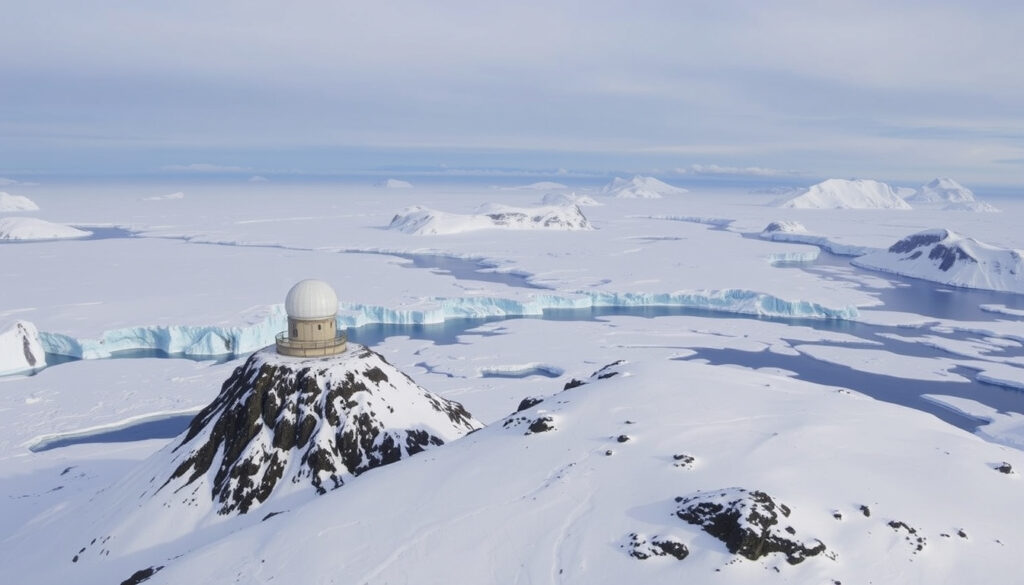
Trump’s bold 2019 push to acquire Greenland from Denmark centered on strategic reasons explained, bolstering U.S. Arctic dominance and mineral access amid rising tensions.
Frequently asked questions
What two countries does Trump want to take over?
Trump has expressed interest in both Greenland and Canada, though Canada has received less aggressive rhetoric than the tariff threats directed at Denmark over Greenland. The acquisition framework he announced with NATO Secretary Rutte focused specifically on Greenland and the broader Arctic region.
Is Trump in a crisis with Denmark over Greenland?
Yes. Denmark has refused to sell Greenland, and Trump has responded with tariff threats beginning February 1, 2026, escalating to 25% by June 1, 2026. The appointment of a US special envoy to Greenland further angered Danish officials, creating a diplomatic crisis within the NATO alliance.
Why is Greenland so wealthy?
Greenland’s wealth potential comes from mineral resources—including rare earth elements critical for technology—rather than current production or population. Climate change is making previously inaccessible deposits economically viable, increasing the island’s strategic value.
Who owns most of Greenland?
Greenland is an autonomous territory of the Kingdom of Denmark. While Denmark maintains sovereignty, Greenland controls most domestic affairs including resource rights. The Danish government has repeatedly stated Greenland is not for sale.
Does Greenland want to be part of the United States?
Greenlandic public opinion has not indicated support for American annexation. Greenland achieved autonomous self-governance in 2009 and maintains its own parliament. Any status change would require consent from both Greenlandic and Danish populations.
Why Trump wants Greenland and Canada
Trump has framed both acquisitions in terms of North American continental security, arguing that Russian and Chinese presence in the Arctic and near North America threatens US interests. However, his approach to Canada has been less aggressive than his tariff threats against Denmark over Greenland.
More related posts
 What Is Modal Fabric? Guide to Pros, Cons & Comparisons
 Peruvian Restaurant Near Me: Best Spots & Dishes in Dublin
 How to Draw a Bunny: Easy Step-by-Step Tutorial for Beginners
 When Is the Ryder Cup – 2025 Dates Schedule Results
 In and Out Secret Menu: Full Guide to Items and Orders
 Jim Irsay Cause of Death: Pneumonia, Overdoses & FBI Probe
 Dirty Soda Near Me: Top Spots for Sonic, Local Shops & More