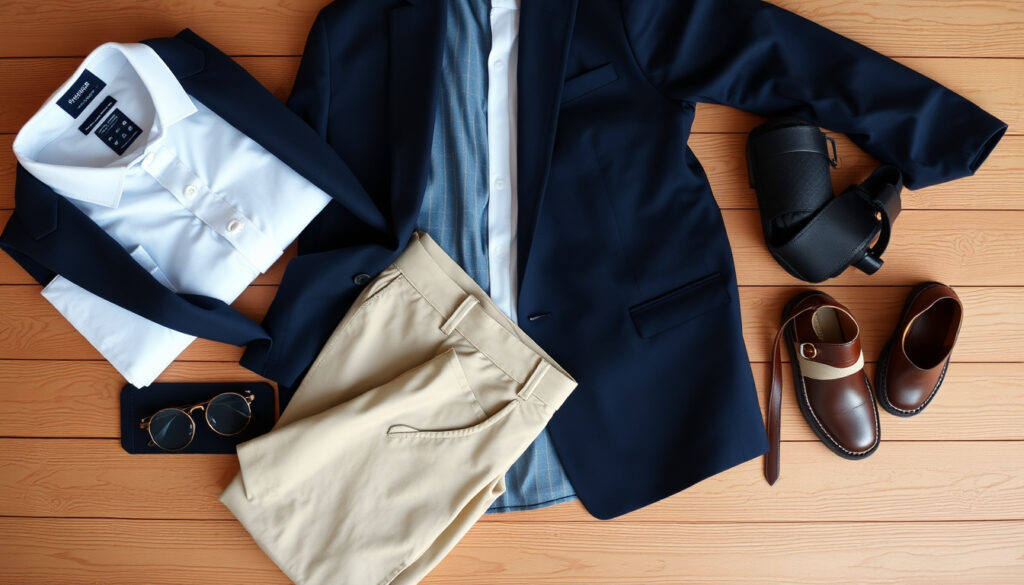
Smart Casual Dress Code: Guide, Rules, Examples & Tips
You’ve received the invitation: smart casual. Your mind immediately goes to the closet—dark jeans? That blazer you wore once? Is a T-shirt absolutely out? You’re not alone. Smart casual is the dress code that everyone references but nobody defines clearly, which is exactly why it causes the most confusion. This guide cuts through the ambiguity with specific rules for men and women, regional variations across Ireland and the UK, clear dos and don’ts, and a practical packing rule to make it all click.
Dress Code Type: Western ambiguous standard ·
Key Components: Casual wear + smart elements ·
Common Context: Restaurants, weddings ·
Regional Note: Varies in Ireland/UK
Quick snapshot
- Smart casual combines casual base with refined elements (The Irish Road Trip)
- Dark, clean jeans work in informal Irish settings (Limerick Leader)
- Chinos are the safest trouser choice if dress code is unclear (Limerick Leader)
- Jewellery should be modest in smart casual (Evening Standard)
- Exact jeans allowance varies by UK city (Joe Browns city guide)
- How strictly upmarket Dublin venues enforce the code (Islands travel guide)
- Where trainers shift from acceptable to inappropriate (Gap UK guide to smart casual)
- Workplace jeans acceptance grew significantly in the 2020s (Primark style guide)
- Upmarket dress codes tightened in Dublin through the 2020s (Islands travel guide)
- Chinos increasingly replacing jeans as the default smart casual trouser for men (Joe Browns city guide)
- More workplaces formalising written dress code policies (Primark style guide)
Five fact dimensions define how smart casual actually works: the core mix of casual and polished pieces, how much ambiguity the dress code carries across contexts, and the typical venues where it appears.
| Field | Value |
|---|---|
| Core Mix | Casual + smart |
| Ambiguity Level | High (context-dependent) |
| Typical Venues | Semi-formal events |
What is smart casual dress code?
Smart casual sits between formal and casual—a dress code with no universal rules, only guidelines that shift with context. According to Evening Standard (UK lifestyle authority), it’s an ambiguously defined Western standard that asks you to look polished without looking stiff. The Irish Times describes it practically: skirt or slacks with a shirt for women, trousers with a jumper or jacket for men, and no T-shirts.
Definition and origins
Smart casual emerged in the mid-20th century as workplaces became less rigid and social occasions more varied. It never had an official rulebook—just a loose agreement that you should look “put together” without overdressing. This ambiguity is exactly what makes it confusing, but also what makes it flexible.
General guidelines
Three principles define the look:
- Elevated basics—clean, well-fitted clothing in quality fabrics
- Polished footwear—either dress shoes or clean, minimal sneakers
- Intentional accessories—modest jewellery, a watch, a quality bag
The key is balance: if your top is smart, your bottom can lean casual. If your bottom is formal, your top can be relaxed. Never go all-in on either extreme.
Smart casual is one of the most requested dress codes for workplace events and social occasions, precisely because it offers flexibility within structure. That’s also why it causes the most confusion—there is no single “smart casual outfit” that works everywhere.
Are jeans ok for smart casual?
The answer depends on where you are, what you’re wearing, and how strictly the dress code is enforced. According to Levi’s style guide (jeans authority), the fit and wash matter most: straight or slim fit in darker washes work best. Primark recommends straight or slim dark wash jeans styled with a button-down shirt or blazer for men.
Debretts, the British etiquette authority, allows jeans for smart casual but only for “laid-back events, not weddings.” Evening Standard reports that in stricter UK contexts, denim of any variety ideally should not be worn—especially ripped jeans.
When jeans work
- Dark indigo or black denim, clean and without wear marks
- Paired with a blazer, collared shirt, or quality knit
- At pubs, casual restaurants, or informal social events
- In Ireland, where the general dress code leans more relaxed
Styling tips
- Skip skinny, ripped, or cargo jeans entirely
- Dark wash over light wash—light denim reads too casual
- Tuck in your shirt or layer with a jacket to elevate the look
- Finish with leather shoes or clean minimal sneakers
The catch: context determines whether denim passes or fails—always assess the venue before packing your jeans.
The rule: if you’re unsure, chinos are the safer bet. Limerick Leader confirms they are “always a safe bet” if you’re unsure about the dress code.
What is not allowed in the smart casual dress code?
Smart casual has clear boundaries. According to Gap UK guide to smart casual (UK fashion authority), ripped jeans and graphic tops are not smart casual. Evening Standard adds that trainers should stay home for strict smart casual, and jewellery should remain modest.
Common don’ts
- Athletic wear—tracksuits, sports jerseys, running shoes
- Ripped, faded, or light-wash jeans
- Cargo shorts or shorts in general (Ireland especially favors long trousers due to weather)
- T-shirts, hoodies, or anything with large logos
- Flip-flops, sandals, or overly casual footwear
Outfit pitfalls
- Mixing formal and very casual items without a bridging layer
- Wearing sweatpants in public (described as “slovenly” in Irish travel guidance)
- Underdressing for upmarket venues—Dublin nightclubs and fine dining restaurants may turn you away
What this means: smart casual rejects both the gym and the couch—it demands deliberate effort without overthinking.
What is smart casual in Ireland?
Ireland has its own take on smart casual, generally more relaxed than the UK. The Irish Road Trip notes that jeans and a shirt are common for restaurants and pubs. Islands (travel guide) confirms that traditional Irish pubs have no dress code—jeans and sneakers are fine and no one will look twice.
But the picture changes in upmarket Dublin. Islands reports that upmarket restaurants may insist on smart casual, and nightclubs risk turning away those who don’t comply. Layers are key for Ireland dressing—weather is unpredictable and the wind is constant.
Local variations
- Traditional pubs: no code, dress as you like
- Casual restaurants: jeans and shirt acceptable
- Upmarket venues: smart casual required, sometimes formal
- Fine dining: may require formal attire
The pattern: Ireland’s casual reputation masks a growing gap between rural pubs and city venues that now enforce dress standards.
UK comparisons
The UK is generally stricter on denim. According to Evening Standard, ideally no denim in UK smart casual contexts. In Ireland, dark jeans are acceptable in informal smart casual—Limerick Leader confirms “smart clean dark-coloured jeans are acceptable in informal smart casual in Limerick, Ireland.”
Ireland also favors long trousers year-round due to cold and wind—shorts are rare even in summer. Sweats are socially unacceptable in public settings.
What is the 3-3-3 rule for clothes?
The 3-3-3 rule is a packing method designed to simplify travel wardrobes: 3 shirts, 3 bottoms, 3 pairs of shoes. The goal is to create a capsule wardrobe where every item works with every other item, reducing decision fatigue while maximizing outfit variety.
Rule breakdown
For smart casual travel:
- 3 tops: mix of button-downs, quality knits, one blazer
- 3 bottoms: 2 chinos, 1 dark jeans (if context allows)
- 3 shoes: dress shoes, clean sneakers, one versatile boot
What this means: the 3-3-3 framework forces hard choices—each item must earn its place by pairing with at least three others.
Application to smart casual
Apply the 3-3-3 rule with smart casual in mind:
- Choose shirts in neutral tones that work with both chinos and jeans
- Pick a blazer or jacket that elevates any outfit
- Stick to one dark jeans option only if the destination is Ireland or informal
- Footwear should cover smart casual at its most formal and most relaxed
The implication: visitors who pack lightly using this rule will navigate Ireland’s dress spectrum from pub to fine dining without wardrobe anxiety.
Smart casual styling steps
Here’s how to build a smart casual outfit from the ground up: For those seeking further guidance on smart casual attire, you can Berufsbekleidung in der Nähe Geschäfte finden.
Step 1: Start with the bottom
Choose your trouser first—it sets the tone. Chinos are always safe. Dark jeans work if the occasion allows. Avoid anything torn, faded, or too tight.
Step 2: Add your top
A collared shirt or quality knit sweater. For women, a blouse or structured top. T-shirts and hoodies are out unless layered under a jacket.
Step 3: Layer smartly
A blazer or jacket elevates almost any outfit. Even a cardigan in quality fabric works. Layers also help in Ireland where weather shifts quickly.
Step 4: Choose appropriate footwear
Clean leather shoes or minimal sneakers. Avoid gym trainers, flip-flops, or worn sandals. In Ireland, boots work well with the climate.
Step 5: Refine with accessories
Modest jewellery, a quality watch, and a bag that matches the occasion. Keep accessories understated—smart casual is not the place for statement pieces.
What we know and what we don’t
Confirmed
- Casual base with refined elements (The Irish Road Trip)
- Dark jeans acceptable in informal Irish settings (Limerick Leader)
- No denim in formal UK smart casual (Evening Standard)
- Chinos always a safe bet (Limerick Leader)
Unclear
- Exact jeans allowance varies by UK city
- How strictly upmarket Dublin venues enforce the code
- Where trainers shift from acceptable to inappropriate
“Ideally denim of any variety is not worn in smart casual, especially ripped jeans.”
— Debretts, via Evening Standard (British etiquette authority)
“Smart casual” translates as skirt or slacks with a shirt for women, and trousers with a jumper or jacket for men; no T-shirts.
— The Irish Times (Ireland’s newspaper of record)
“A visit to a traditional Irish pub is generally dress-code free; few people will look twice at someone wearing jeans and sneakers.”
— Islands (travel guide)
Jeans have become the crux of smart casual confusion. In Ireland they work in casual settings; in formal UK contexts they should stay in the wardrobe. When packing for a trip, include both dark jeans and chinos—and reach for chinos at upmarket venues.
Ireland’s more relaxed approach reflects its general culture—people are friendly and unworried about appearances. But upmarket venues in Dublin, Limerick, and other cities have raised their standards. The risk of being turned away at a nightclub or upmarket restaurant is real.
Related reading: How long does flu last · Can dogs eat apples
While smart casual blends polish with ease, smart casual attire guide for men and women clarifies nuances like jeans rules seen in UK and Ireland contexts.
Frequently asked questions
What should men wear for smart casual?
Trousers or chinos with a collared shirt, layered with a jacket or quality knit. Dark jeans work in informal contexts. Avoid T-shirts, athletic wear, and casual footwear. The Irish Times defines it as trousers with a jumper or jacket for men.
What defines smart casual for women?
Skirt or slacks with a shirt or structured top. The Irish Times describes it as skirt or slacks with a shirt. Add a blazer or cardigan for more formal settings. Modest jewellery and quality footwear complete the look.
Is a blazer required for smart casual?
Not always. For formal smart casual—a restaurant dinner or workplace event—a blazer or jacket is expected. For informal smart casual—a casual pub or a relaxed restaurant—you can skip it if your other pieces are polished enough. Limerick Leader notes that formal smart casual “requires jacket or blazer,” while informal allows flexibility.
What shoes fit smart casual?
Clean leather shoes, loafers, or minimal sneakers work. Gap UK guide to smart casual confirms trainers are acceptable smart casual footwear if clean and minimal. Avoid athletic shoes, flip-flops, or worn sandals. In Ireland, quality boots also work well.
How does smart casual differ from business casual?
Business casual is tied to the workplace and leans more formal in professional settings. Smart casual is more versatile—appropriate for restaurants, social events, and casual gatherings. Business casual rarely includes jeans; smart casual sometimes does, depending on context.
What accessories for a smart casual wedding?
Keep accessories modest and elegant. A quality watch, minimal jewellery, and a dressy bag work well. For men, a tie is optional but can add polish. Avoid anything too flashy or casual—weddings sit at the smarter end of the smart casual spectrum.
Smart casual examples for dinner?
For men: dark jeans or chinos, a button-down shirt, and a blazer with leather shoes. For women: tailored pants with a silk blouse, or a midi skirt with a quality knit. Joe Browns city guide suggests “dark jeans or chinos with blazer and button-down shirt for men in UK cities.”
For anyone dressing for Ireland or the UK, the choice is clear: pack chinos as your safe bet and dark jeans as your fallback for casual settings. When attending a formal event or upmarket venue, reach for the blazer. The single biggest mistake visitors to Ireland make is underdressing for cities while overdressing for rural pubs. Match your outfit to the venue, and you won’t go wrong.
More related posts
 India vs Pakistan Latest: Cricket Thaw Amid Frozen Diplomacy
 South Dakota State Football: FCS, NFL Pipeline & Schedule
 2025 Toyota Grand Highlander Hybrid – Specs, Price, MPG & Trims
 Fantastic Four 2005 Cast: Full List, Ages & Where They Are Now
 St. Louis Cardinals News – Early Season Results Roster Moves
 Fear Street Prom Queen: 2025 Slasher Guide
 Guardians of the Galaxy 3 Cast: Full List and Hidden Details